Showing archive for: “Regulation of Financial Institutions”
Why Corner Post’s Merchant Victory May Not Ring Up Savings
Merchants persuaded a federal appeals court to throw out the Federal Reserve’s debit-card fee cap. They might want to hold the applause until they see its replacement. A ruling aimed at the Fed’s arithmetic could leave room for a higher cap—and a fuller accounting of what consumers get for those fees. In Corner Post, Inc. ... Why Corner Post’s Merchant Victory May Not Ring Up Savings

The Price of Peace in the Swipe-Fee Wars
After 21 years, two failed settlements, and enough economic testimony to qualify as its own industry, the great interchange-fee war may finally be nearing a cease-fire. The terms are imperfect, and the case never had much economic merit. Even so, the proposed settlement may offer the best available escape from a dispute whose legislative sequels ... The Price of Peace in the Swipe-Fee Wars

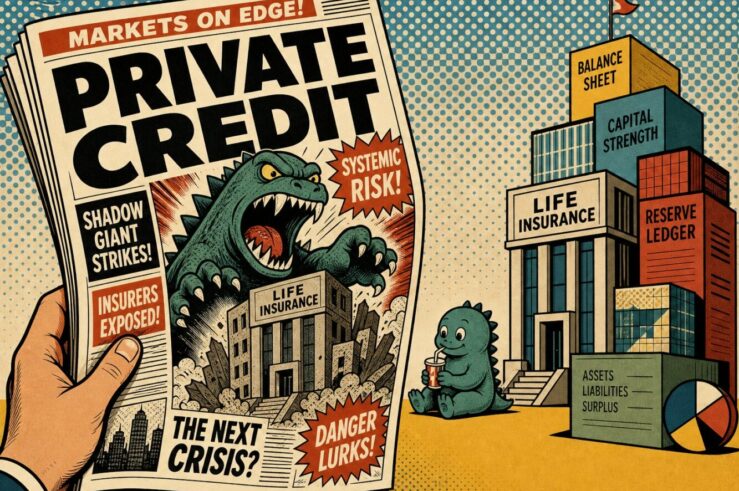
Private Credit, Public Panic: Why Life Insurers Are Stronger Than the Headlines Suggest
Private credit has become the financial system’s latest designated villain: opaque, fast-growing, and—depending on the headline—one bad quarter away from dragging insurers, banks, and retirees down with it. For the past two years, warnings about life insurers’ private-credit investments have become a staple of financial commentary. In 2024, the International Monetary Fund cautioned that private ... Private Credit, Public Panic: Why Life Insurers Are Stronger Than the Headlines Suggest
The Exit Door Theory of Consumer Finance
Consumer protection often begins with a simple question: Can the consumer walk away? If the answer is no—because switching is hard, data are locked up, markets are fragmented, or new competitors cannot enter—then the problem is not just weak consumer protection. It is weak competition. That is the frame for a deceptively basic question: How ... The Exit Door Theory of Consumer Finance

New Financial Regulatory Reforms Could Spur the Economy
Strong and vibrant financial markets are key to a thriving American economy. Rising regulatory costs, however, pose a burgeoning threat to financial-market efficiency. Recent executive-agency initiatives to harmonize federal government oversight of U.S. financial markets and to reform existing regulatory programs are notable. A new push to eliminate anticompetitive federal financial rules could yield further ... New Financial Regulatory Reforms Could Spur the Economy
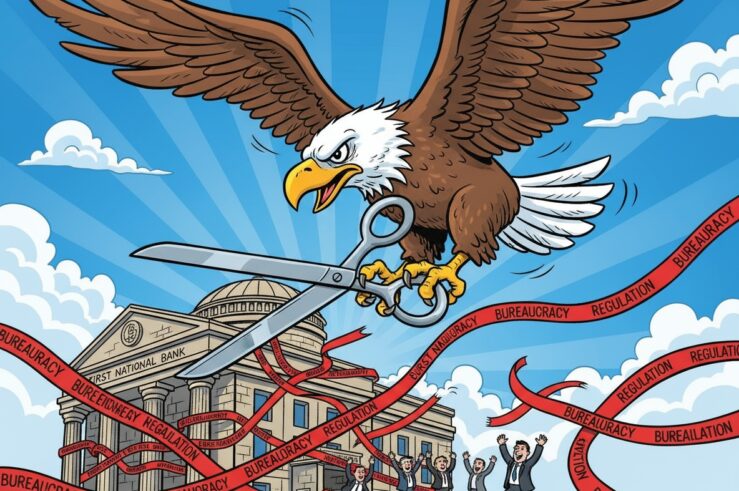
Restoring the Marketplace of Ideas: Examining the Executive Order on Ending Federal Censorship
President Donald Trump has issued a slew of executive orders (EOs) in his first week back in office. But one that caught my attention was the EO titled “Restoring Freedom of Speech and Ending Federal Censorship.” The EO places limits on what federal officials in the executive branch can do in relation to speech, including ... Restoring the Marketplace of Ideas: Examining the Executive Order on Ending Federal Censorship

What the IMF Gets Wrong About Costa Rica’s Payment-Card Caps
The Asamblea Legislativa de la República de Costa Rica (Costa Rica’s legislature) moved in 2020 to empower the Banco Central de Costa Rica (BCCR), the nation’s central bank, to impose price controls on fees charged by both payment-card issuers and acquirers. I have written previously about the perverse effects these price controls can generate (here, ... What the IMF Gets Wrong About Costa Rica’s Payment-Card Caps
Vullo and the Dangers of Government Coercion Over Speech
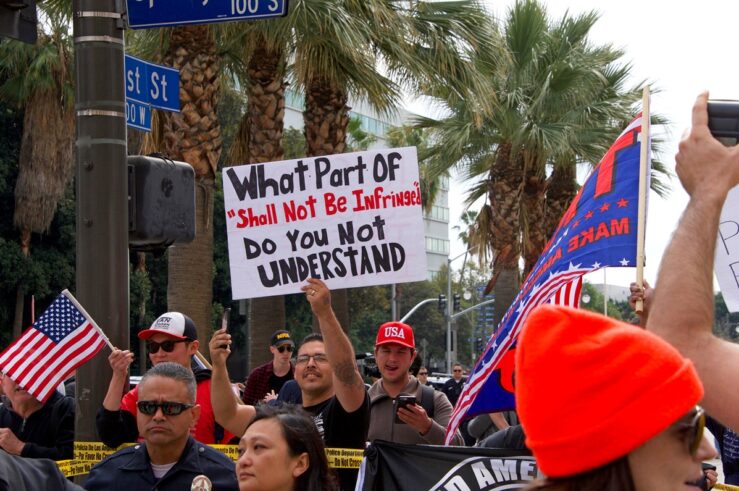
The U.S. Supreme Court delivered a major victory for free speech and struck a blow against government censorship-by-proxy yesterday in NRA v. Vullo: “Government officials cannot attempt to coerce private parties in order to punish or suppress views that the government disfavors.” This is a major decision, and will have implications for free speech online, ... Vullo and the Dangers of Government Coercion Over Speech
Chris DeMuth Jr: Perspectives on Antitrust from Financial Markets and Venture Capital
How much do you take potential antitrust concerns into account when evaluating investments or mergers and acquisitions? Has this changed over time? Antitrust is a big part of M&A and the work I do in analyzing deals at Rangeley Capital. It has always been important, but the importance has grown with this administration’s activist approach. ... Chris DeMuth Jr: Perspectives on Antitrust from Financial Markets and Venture Capital

The Law & Economics of the Capital One-Discover Merger
Capital One Financial announced plans late last month to acquire Discover Financial Services in a $35.3 billion deal that would give Capital One its own credit-card payment network, while simultaneously allowing the company to expand its deposit base, credit-card offerings, and rewards programs. Conversely, credit analysts like Matt Schulz of LendingTree note that “if Capital ... The Law & Economics of the Capital One-Discover Merger

The CFPB’s Misleading Slant on Competition in Credit-Card Markets
In yet another example of interagency cheerleading from the Federal Trade Commission (FTC), Chair Lina Khan recently touted the work of the Consumer Financial Protection Bureau (CFPB) on payments networks: New @CFPB research reveals that large banks are offering worse credit card terms & interest rates than small banks and credit unions, regardless of credit ... The CFPB’s Misleading Slant on Competition in Credit-Card Markets

The Effect of VAT Withholding Requirements in Latin America
Innovations in payment systems are rapidly transforming the world economy. While Bitcoin, Ethereum, and other decentralized blockchain-based systems tend to garner much of the press (good and bad), centralized peer-to-peer (P2P) payment systems are far more common. (Note that I use the term P2P here in its original sense to mean all peer-to-peer transactions, which ... The Effect of VAT Withholding Requirements in Latin America