Showing archive for: “Artificial Intelligence – Law Policy & Ethics”
EU Digital Omnibus Hands the Wheel to the Referee
The Digital Omnibus was supposed to make European Union data law simpler, clearer, and less allergic to reality. Instead, the Council of the European Union appears to be turning it into something more familiar: a reform that trims the statute, fattens the recitals, and hands more interpretive power to the same regulators whose maximalist readings ... EU Digital Omnibus Hands the Wheel to the Referee

WarGames, Shopping Bots, and the Statute Trap: The CFAA and Amazon v Perplexity
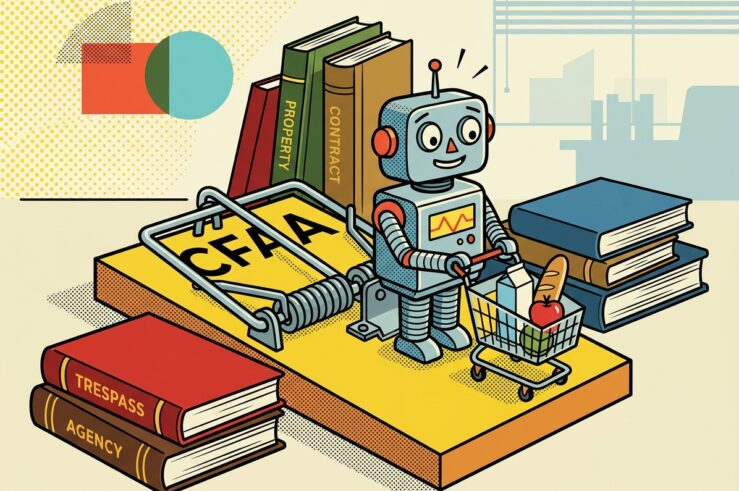
When the 9th U.S. Circuit Court of Appeals hears oral argument later today in Amazon.com Services LLC v. Perplexity AI, Inc., it will confront a novel question: how should the Computer Fraud and Abuse Act (CFAA), a statute designed to punish computer break-ins, apply to an AI agent that browses the web on a user’s ... WarGames, Shopping Bots, and the Statute Trap: The CFAA and Amazon v Perplexity
Brussels’ AI Catch-22: Siri, Define ‘Choice’
Did Apple jump, or was it pushed? That is the question Brussels would rather not answer after Apple announced that its new Siri AI features will not ship on iPhones and iPads in the European Union. The European Commission says Apple made a free choice. Apple’s actual choice was between opening the iPhone in ways ... Brussels’ AI Catch-22: Siri, Define ‘Choice’

Artificial Intelligence, Natural Ignorance
Everyone in Washington seems to agree that artificial intelligence must be governed. The only real dispute is who gets the steering wheel. Congress? Federal agencies? State legislatures? Some newly minted task force with a long acronym and a taste for reporting requirements? That debate is already too narrow. President Donald Trump’s recent executive order on ... Artificial Intelligence, Natural Ignorance
You Can’t Export-Control the Future: The Case for Defensive AI
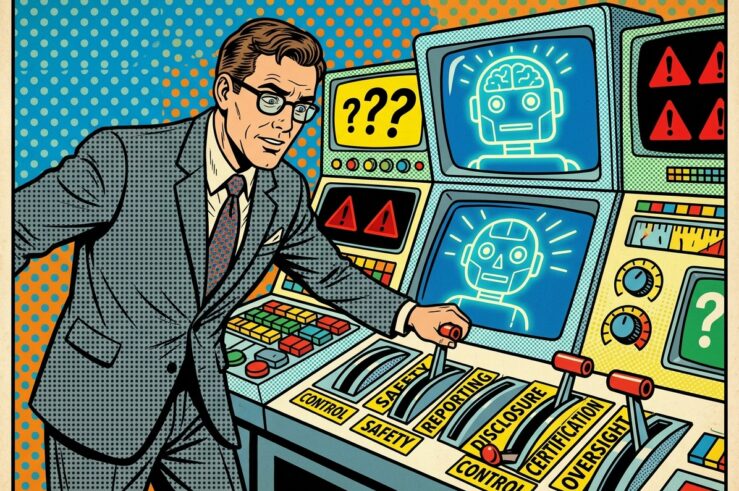
Washington keeps looking for the AI equivalent of a locked vault: control the chips, control the models, control the danger. But artificial intelligence is starting to look less like uranium and more like malware—hard to contain, easy to adapt, and most dangerous where people actually use it. The White House’s new AI executive order is ... You Can’t Export-Control the Future: The Case for Defensive AI

Brazil, Bots, and the Price of Free
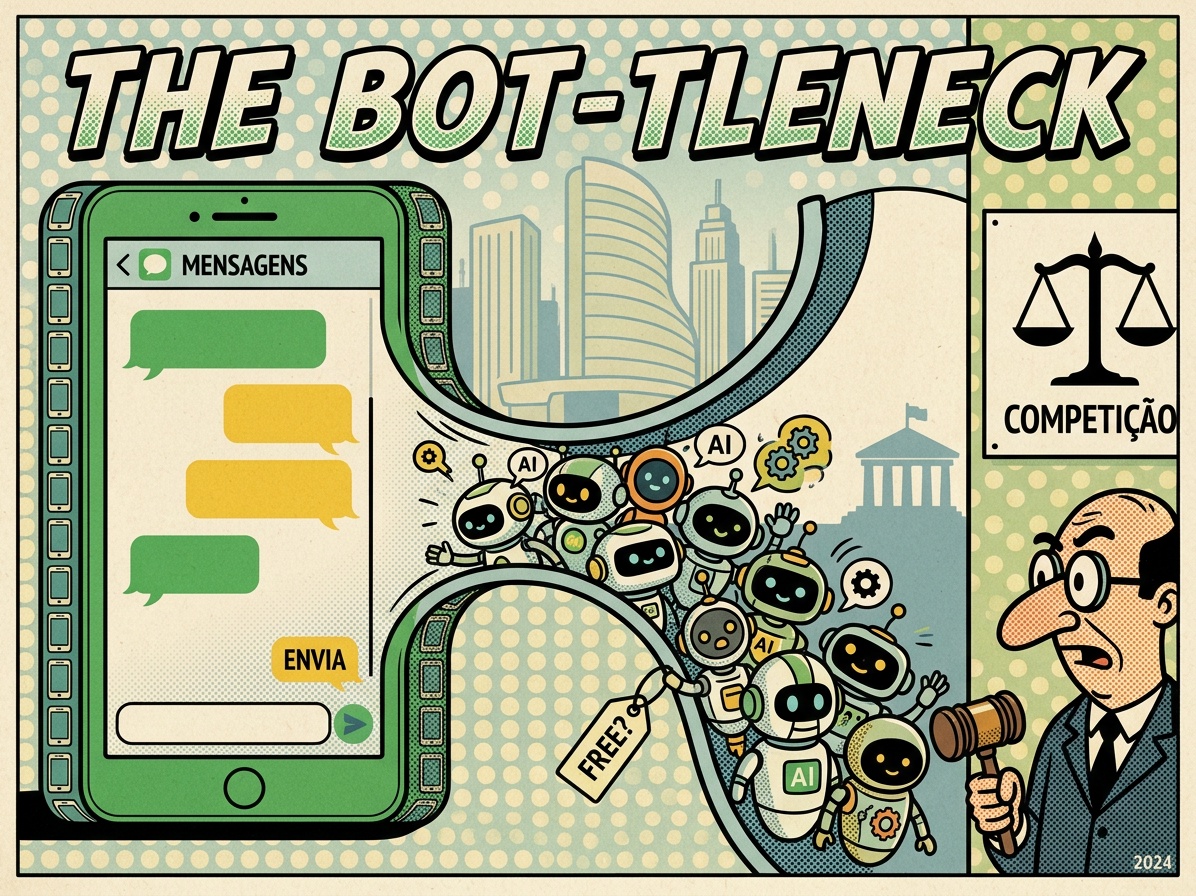
Brazil’s WhatsApp case began as a fight over access to an application programming interface, or API—the technical doorway that lets outside services connect to WhatsApp. It has quickly become a test of how antitrust law should treat AI distribution. The Federal Court of São Paulo has now suspended the R$250,000, or about $50,000, daily fine ... Brazil, Bots, and the Price of Free
How China Accidentally Made Consumer Welfare Cool Again
The consumer welfare standard was supposed to be on the defensive. After nearly a decade of attacks from the neo-Brandeisian movement, critics had cast it as too narrow, too technocratic, and too forgiving of “Big Tech.” Yet the standard’s most important new ally may turn out to be an unexpected one: geopolitics. The consumer welfare ... How China Accidentally Made Consumer Welfare Cool Again
Brazil’s Google News Case and the Art of Not Letting Go
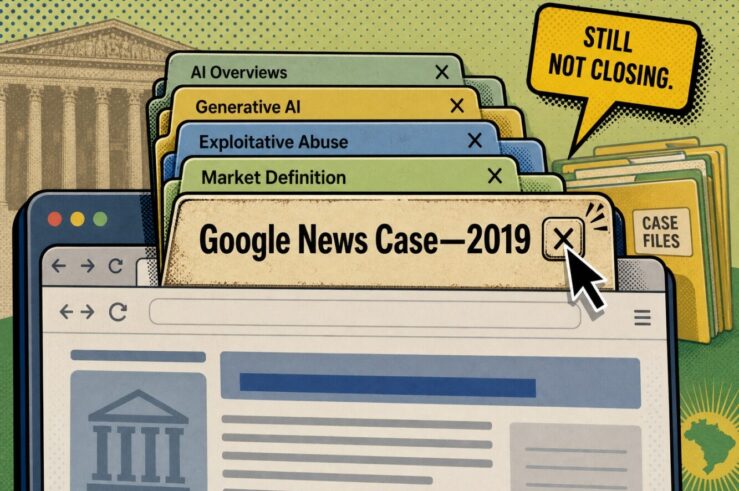
Some legal cases age like wine. Others age like browser tabs left open too long. Brazil’s Google News inquiry belongs firmly in the latter category. On April 3, Brazil’s Administrative Council for Economic Defense (CADE) announced that its Tribunal had unanimously decided to send a seven-year-old administrative inquiry concerning Google’s use of journalistic content—whether for ... Brazil’s Google News Case and the Art of Not Letting Go
The Bundle of All Fears: India’s Risky War on Integration
Good intentions make for lousy competition law when they are stapled to bad economics. That is the trouble with the new fashion in digital regulation: It treats integration as suspicion, product design as coercion, and innovation as something firms may pursue only after regulators decide it is sufficiently tidy. The European Union’s Digital Markets Act ... The Bundle of All Fears: India’s Risky War on Integration

The AI Jobs Panic Comes to Sacramento
California has seen the future of work, and Sacramento’s first instinct is to convene 14 task forces about it. Gov. Gavin Newsom signed Executive Order N-6-26 today, setting California’s workforce agencies in motion on directives involving research reviews, revisions to the state’s Worker Adjustment and Retraining Notification (WARN) Act, studies of new safety-net programs, a ... The AI Jobs Panic Comes to Sacramento
Don’t Freeze the AI Race at the Starting Line
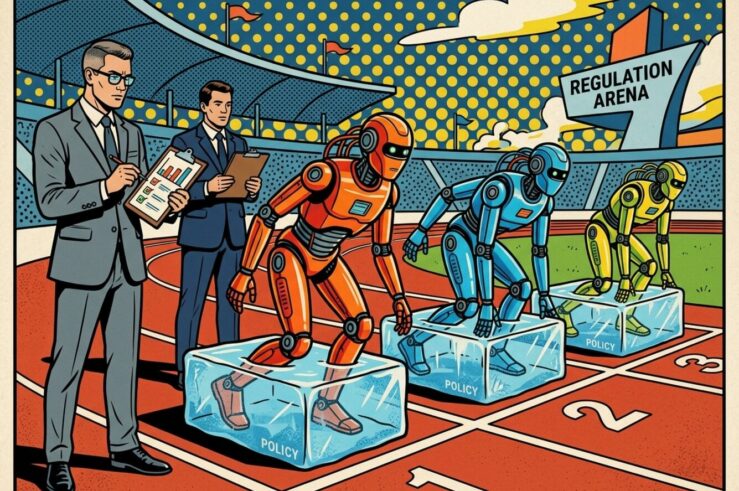
Regulators keep warning that AI markets are about to be captured by Big Tech. The awkward fact is that AI markets keep refusing to cooperate. Several years into the generative-AI boom, the sector still looks less like a coronation than a street fight: OpenAI, Google, Meta, Amazon, Anthropic, Perplexity, Mistral, xAI, and others are battling ... Don’t Freeze the AI Race at the Starting Line
You Can’t Regulate a GPU Into Existence
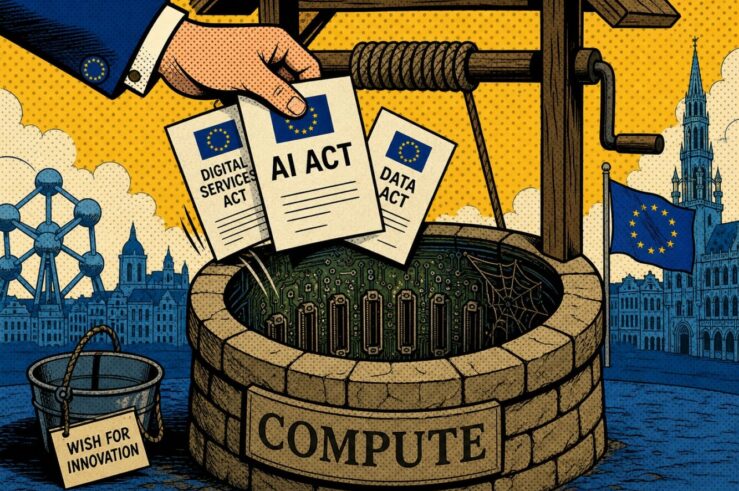
Europe would like digital sovereignty to be a jurisdictional problem. It would be much easier for EU bureaucrats if the path to frontier AI ran through Brussels, could be secured by certification, and depended mainly on where a given cloud provider is incorporated. Unfortunately, the binding constraints are less cooperative: GPUs, chips, memory, power, capital, ... You Can’t Regulate a GPU Into Existence