Showing archive for: “Artificial Intelligence – Law Policy & Ethics”
Europe’s Privacy Paradox: Fort Knox for Search Data, a Checkbox for Your Phone
Brussels has developed a curious theory of digital privacy. Anonymous search queries need audits, screening, and a security cordon. Your messages, microphone, and screen can make do with a checkbox. That is the logic running through two decisions the European Commission adopted last week involving the same company, under the same law, on the same ... Europe’s Privacy Paradox: Fort Knox for Search Data, a Checkbox for Your Phone

The SEARCH Act Copies Europe’s Homework—and Its Mistakes
Some in Congress want to make online search more competitive by deciding in advance how search competition should work. Sens. Amy Klobuchar (D-Minn.) and Eric Schmitt (R-Mo.) introduced the Securing Enforcement of Americans’ Right to Competition at Home (SEARCH) Act earlier this month. Billed as a bipartisan effort to protect consumers and curb Big Tech’s ... The SEARCH Act Copies Europe’s Homework—and Its Mistakes

Europe Wants Tech Champions, Then Makes Them Share the Trophy
Europe wants its own technology champions. It just seems less comfortable with what champions look like once they arrive. The European Commission’s latest Digital Markets Act (DMA) decisions capture that tension. Europe wants more innovation, investment, and globally competitive digital platforms. Yet when a company assembles the data, technology, distribution, and complementary services needed to ... Europe Wants Tech Champions, Then Makes Them Share the Trophy

The Missing Rival: China and the Limits of AI Antitrust
The standard AI competition story has plenty of supposed villains. It just keeps leaving out one of the biggest. Regulators and academics warn that a small group of firms—including Amazon, Anthropic, Google, and OpenAI, with Microsoft and Meta sometimes added—will dominate generative artificial intelligence. Their advantages in computing power, capital, data, and distribution will harden ... The Missing Rival: China and the Limits of AI Antitrust
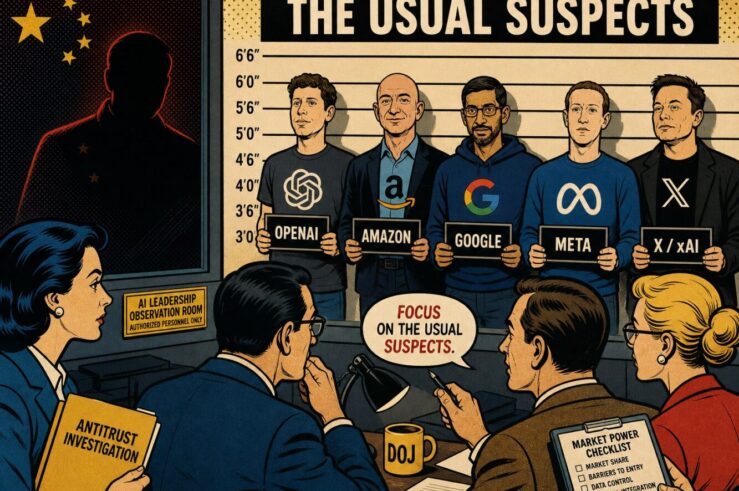
Lightning in a Bottleneck: How Regulatory Gridlock Is Choking America’s Energy Boom
America’s power grid has plenty of new customers and no shortage of new ideas. What it lacks is a regulatory system capable of connecting the two. Artificial intelligence data centers, advanced manufacturing, and cryptocurrency operations are driving electricity demand sharply higher. Yet the rules for connecting new power sources and major users remain slow, fragmented, ... Lightning in a Bottleneck: How Regulatory Gridlock Is Choking America’s Energy Boom

The Fatal Conceit Gets a GPU Cluster: Bernie Sanders’ Plan to Socialize AI
The American A.I. Sovereign Wealth Fund Act rests on a sweeping claim about the ownership of value created by artificial intelligence. Because AI models are trained on data generated by the public, the bill treats the resulting gains as a public resource subject to state control and redistribution. Sen. Bernie Sanders’ (I-Vt.) proposal would require ... The Fatal Conceit Gets a GPU Cluster: Bernie Sanders’ Plan to Socialize AI
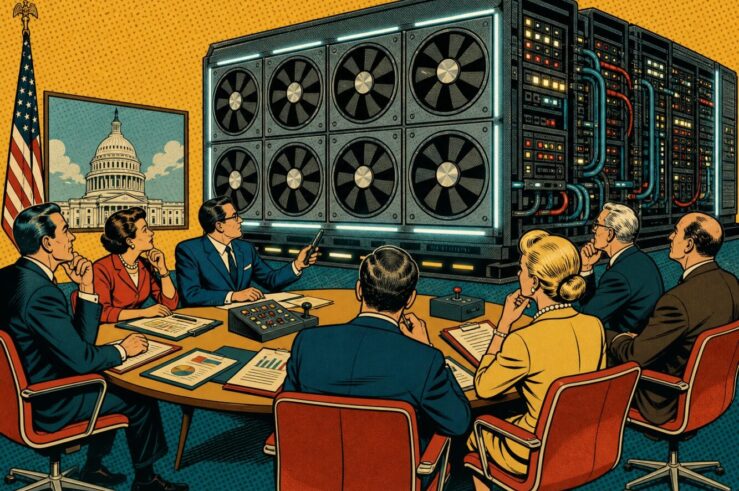
Killer Theories and Acqui-Hire Alibis
Antitrust agencies have a habit of giving new labels to old anxieties. In artificial intelligence, the latest worry is that partnerships between large technology firms and startups are not partnerships at all, but mergers in clever disguises. In the first article in this series, we examined how Brazil’s Administrative Council for Economic Defense (CADE) has ... Killer Theories and Acqui-Hire Alibis
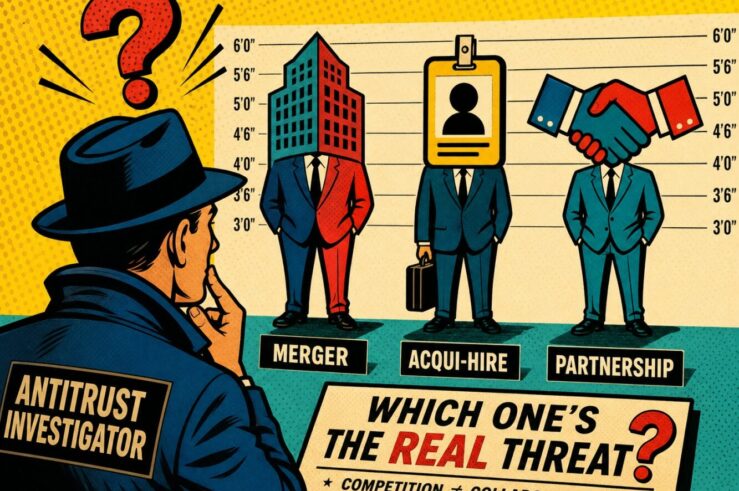
Don’t Put the Government on the Cap Table
When Washington offers to “share the upside,” check the fine print. With artificial intelligence, the proposed bargain is not just that taxpayers might get a slice of the next great American industry. It is that the federal government would become part owner of the companies that increasingly shape what Americans ask, read, write, and believe. ... Don’t Put the Government on the Cap Table

Brazil Catches the Acqui-Hire Wave
The global antitrust wave over Big Tech’s artificial intelligence deals has reached Brazil. The question is whether Brazil’s competition authority is paddling into a real breaker—or mistaking regulatory chop for a swell. Last month, Brazil’s antitrust authority, the Administrative Council for Economic Defense (CADE), entered that debate. It issued part of its long-awaited decisions on ... Brazil Catches the Acqui-Hire Wave

Gotta Catch ’Em All? Antitrust and the AI Talent Wars
The AI talent wars have produced a steady stream of stories that seem tailor-made to confirm everyone’s worst suspicions about Big Tech: nine-figure pay packages for star researchers, entire startup teams absorbed without a formal acquisition, and—most strikingly—reports of elite AI scientists paid handsomely to do nothing for a year under “garden leave” arrangements rather ... Gotta Catch ’Em All? Antitrust and the AI Talent Wars

Act First, Learn Later: AI Antitrust and the Error Costs of Regulation at Machine Speed
Competition enforcers appear to have discovered their own version of artificial intelligence: act first, learn later. In the span of a week, agencies across four continents moved to reshape how AI products are built, distributed, and integrated—mostly before anyone has shown, in a final appealable decision, that the challenged conduct harms competition. Last week, a ... Act First, Learn Later: AI Antitrust and the Error Costs of Regulation at Machine Speed

Bolted to the Floor, Not Written in the Clouds
Europe wanted technological sovereignty. On June 12, it got a demonstration of technological dependence. That day, the U.S. government cut non-Americans off from access to two of the world’s most advanced AI models. Brussels’ flagship response to precisely this scenario—the Cloud and AI Development Act (CADA)—would not have helped. As I argue in “Europe’s Sovereignty ... Bolted to the Floor, Not Written in the Clouds