Showing archive for: “IO: Firm Structure Purpose Organization & Contracting”
Competitiveness Without the Cronyism
Big mergers are back in fashion. So are “national champions,” industrial-policy wish lists, and solemn warnings that antitrust enforcement may leave the West defenseless against foreign rivals. In Washington, Brussels, and London, competition policy increasingly sounds less like economics and more like geopolitical strategy. That trend creates a real risk of confusion. Antitrust is not ... Competitiveness Without the Cronyism

Stack Wars: The Garage Myth Meets the Five-Layer Cake
The canonical story of the modern tech firm still starts in a metaphorical garage. William Hewlett and David Packard with the audio oscillator. Steve Jobs and Steve Wozniak with the Apple I. Jeff Bezos with a door-desk and a handful of mail-order books. We like the simplicity—one inventor, one widget, one market. It’s comforting. Sometimes, ... Stack Wars: The Garage Myth Meets the Five-Layer Cake

Reverse Patent Pools and Other TTBER Tall Tales
In standard-essential patent (SEP) licensing, every procedural tweak is also a skirmish over bargaining power. That is what makes licensing negotiation groups (LNGs) more than an obscure acronym in the European Commission’s 2026 Technology Transfer Block Exemption Regulation (TTBER) and accompanying Guidelines (TTGs). LNGs would allow technology implementers to bargain collectively with rights holders. Depending ... Reverse Patent Pools and Other TTBER Tall Tales

AI, Antitrust, and the Mirage of Data Dominance
Not all supposed barriers to entry are created equal. The ones that matter for antitrust are not just costs, advantages, or inputs controlled by leading firms. They are durable impediments that keep rivals from entering, expanding, and disciplining market power. That distinction matters in generative artificial intelligence (AI), where policymakers increasingly worry that control over ... AI, Antitrust, and the Mirage of Data Dominance

Bad Medicine: Why Breaking Up Big Health Care Could Make It Worse
Washington has found its latest villain: “Big Medicine.” The proposed fix? Break it up and hope the pieces behave better than the whole. Americans have real reasons to be frustrated about high health care costs, and large conglomerates rank somewhere between unpopular and reviled—roughly where Microsoft’s “Clippy” sat in the 1990s. So it’s no surprise ... Bad Medicine: Why Breaking Up Big Health Care Could Make It Worse

‘Market Power in Antitrust: Economic Analysis after Kodak,’ by Benjamin Klein
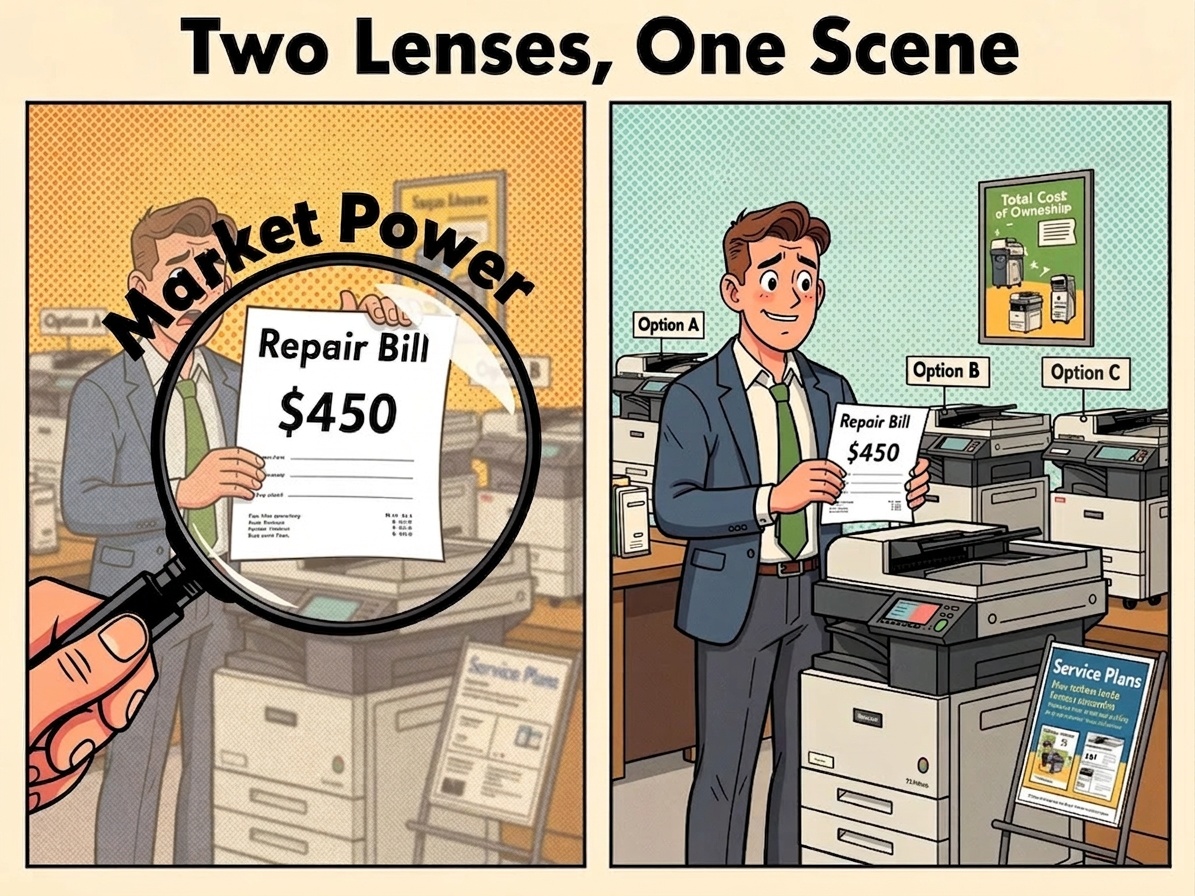
In 1992, the U.S. Supreme Court held in Eastman Kodak Co. v. Image Technical Services that a firm without market power in photocopiers might still possess market power in photocopier parts and service. The Court’s logic turned on opportunistic hold-up: Kodak could profit by trading short-run exploitation of locked-in customers for long-run losses in equipment ... ‘Market Power in Antitrust: Economic Analysis after Kodak,’ by Benjamin Klein
The Paramount Question Isn’t Paramount
Big mergers make headlines. They don’t always make antitrust problems. In a previous commentary, I explored the antitrust implications of a potential acquisition of Warner Bros. Discovery (WBD). That uncertainty is now resolved. On Feb. 27, Paramount Skydance Corp. agreed to acquire WBD for roughly $110 billion in enterprise value—$31 per share, all cash. The ... The Paramount Question Isn’t Paramount

Rethinking Competitor Collaboration in the AI Era
The Federal Trade Commission (FTC) and the U.S. Justice Department (DOJ) have opened a joint public inquiry into whether to update antitrust guidance for collaborations among competitors. That’s good news. Modern markets—especially those shaped by artificial intelligence—need clear rules that distinguish genuinely harmful collusion from productive, welfare-enhancing cooperation. No one seriously disputes that naked price-fixing ... Rethinking Competitor Collaboration in the AI Era

Acquihires and Other Antitrust Ghost Stories
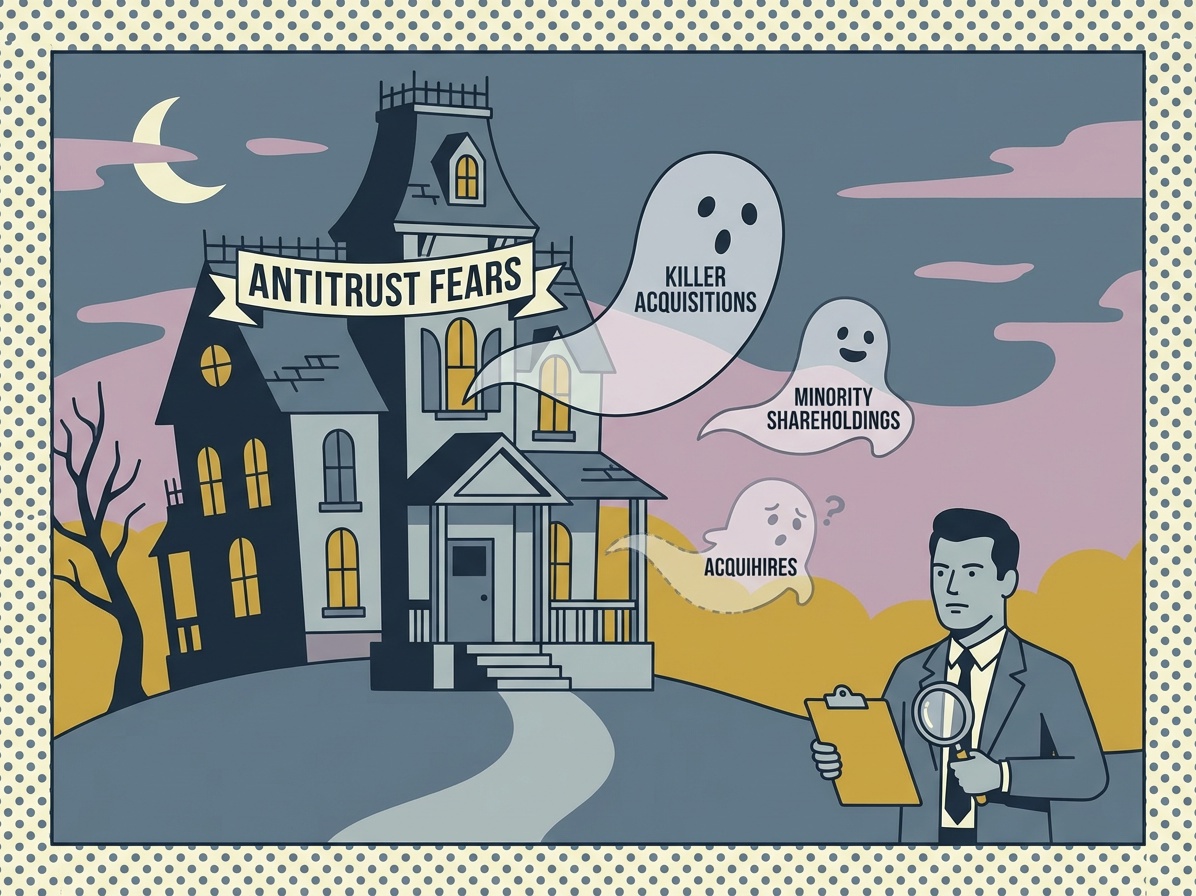
Merger-control debates tend to repeat themselves. As new transaction forms emerge, regulators often move quickly to respond before harm becomes irreversible. Over the past decade, this pattern played out in debates over “killer acquisitions,” and earlier, minority shareholdings. Today, a similar dynamic surrounds so-called “acquihires.” Acquihires are transactions aimed primarily at acquiring a firm’s workforce, ... Acquihires and Other Antitrust Ghost Stories
From Discount to Discrimination: The Strange Economics of Anti-Competitive Antitrust
Antitrust has always been a strange regulatory enterprise. Businesses are largely free to engage in various commercial practices involving price, output, product design, distribution, research, and innovation—until they’re not. Outside the paradigmatic examples of explicit agreements among competitors to fix price and output, many business practices live in a gray zone. Whether a particular pricing ... From Discount to Discrimination: The Strange Economics of Anti-Competitive Antitrust

The FTC, Express Scripts, and the High Cost of Lower Copays
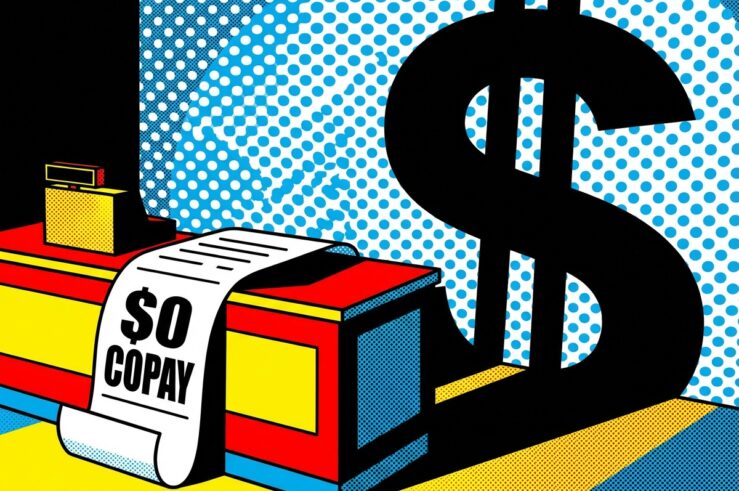
Nearly 17 months after the Federal Trade Commission filed suit against the nation’s three largest pharmacy benefit managers (PBMs), the agency has reached a settlement with one of them: Express Scripts. The complaint alleged that PBMs harmed competition and patients by inflating insulin prices. PBMs negotiate drug prices with pharmaceutical manufacturers and pharmacies on behalf ... The FTC, Express Scripts, and the High Cost of Lower Copays
Netflix, WBD, and the Myth of the Streaming Monopoly
The proposed acquisition of Warner Bros. Discovery (WBD) assets by Netflix is already being cast as a landmark antitrust “test case.” If past deals are any guide, the critiques will follow a familiar script: narrow market definitions, selective data points, and headline-friendly market-share claims designed to trigger alarm. Yet in a video ecosystem defined by ... Netflix, WBD, and the Myth of the Streaming Monopoly