Showing archive for: “Economics of Innovation”
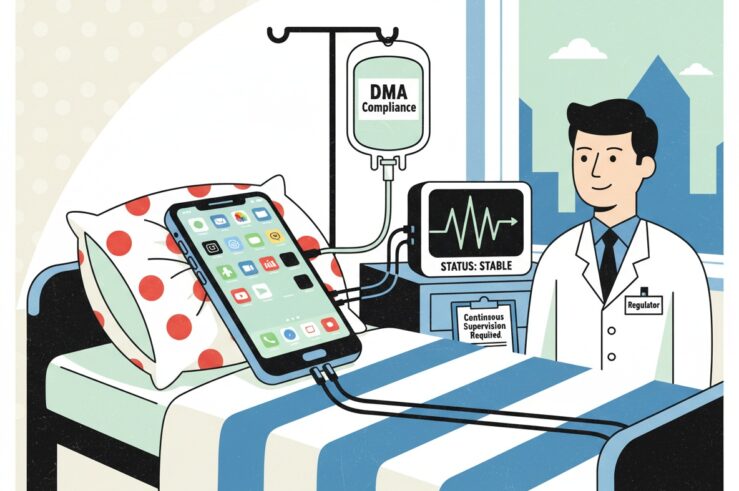
From Cure to Care: The DMA’s Chronic Regulation Problem
The neo-Brandeisian movement—emphasizing market structure and fairness over consumer welfare—has struggled to gain traction in several jurisdictions. In Europe, by contrast, lawmakers have codified its core premises. The Digital Markets Act (DMA) operationalizes this approach by prioritizing ex ante structural interventions intended to reshape rivalry in digital markets. The regime’s most significant feature lies not ... From Cure to Care: The DMA’s Chronic Regulation Problem
Europe Can’t Decouple Its Way to Power
Europe is experiencing a bout of geopolitical vertigo. With Donald Trump having once again floated the purchase of Greenland and threatened tariffs against his European allies, the transatlantic relationship looks more fragile than at any point in recent memory. NATO may yet survive the strain, but hoping for a return to predictability is no longer ... Europe Can’t Decouple Its Way to Power

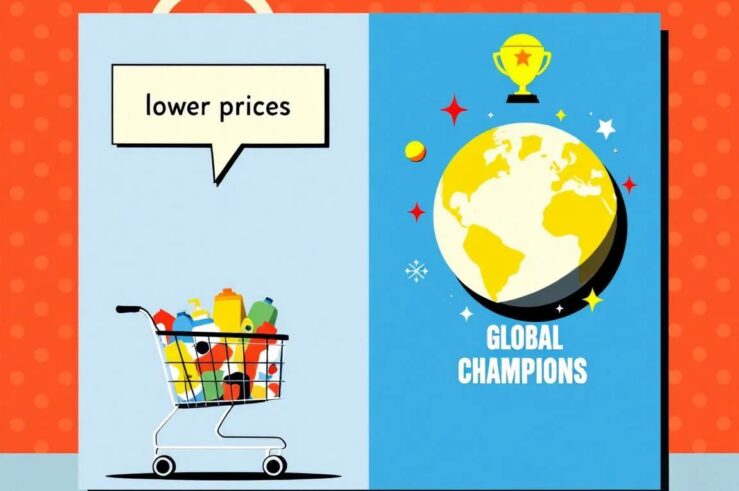
Is Competitiveness Transforming Competition Policy?
Nations around the world are reassessing antitrust policy (generally called “competition policy” overseas). Governments, regulators, and industry leaders are increasingly asking whether traditional antitrust enforcement is holding back the “competitiveness” of domestic firms. The term now shows up in speeches by European commissioners, in UK government directives, in U.S. merger battles, and in Canadian legislative ... Is Competitiveness Transforming Competition Policy?
The Many Tradeoffs of Trump’s ‘Fat Shot’ Deal
Earlier this month, President Donald Trump announced deals with drugmakers to reduce prices and expand access to GLP-1 weight-loss drugs like Ozempic, Zepbound, and Wegovy. Originally developed to help diabetics manage their blood sugar, the drugs mimic the natural hormone glucagone-like-peptide-1 (GLP-1). GLP-1s trigger the pancreas to release insulin at times of high blood-sugar levels, ... The Many Tradeoffs of Trump’s ‘Fat Shot’ Deal

The NIH ‘Access Plan’ Mandate: Central Planning by Another Name
When the National Institutes of Health (NIH) announced in July that it would move forward with a Biden-era proposal to require “access plans” for companies seeking to license NIH-owned patents, the decision stunned many in the innovation community. Industry groups warned that this new bureaucratic hurdle would “kill NIH licensing.” They’re right, and not merely ... The NIH ‘Access Plan’ Mandate: Central Planning by Another Name

The PRO Codes Act and the Perils of Surreptitious Compulsory Licensing
Congress’ latest foray into copyright and administrative law, the Promoting Responsible and Open Codes Act (PRO Codes Act), has surfaced a longrunning tension in the world of standards development. On its face, the bill appears benign—ensuring that, when private standards are incorporated by reference into law, citizens can access them for free. But beneath this ... The PRO Codes Act and the Perils of Surreptitious Compulsory Licensing

Broadcast, Cable, and Creative Destruction: What This Year’s Nobel Teaches Us About Cord Cutting
The timing could hardly be better. As traditional television continues on its years-long decline—with millions of cable subscribers cutting the cord, broadcast audiences shrinking, and streaming splintering into a dozen rival platforms—this year’s Nobel Memorial Prize in Economic Sciences has gone to three scholars who have spent their careers studying this very kind of market ... Broadcast, Cable, and Creative Destruction: What This Year’s Nobel Teaches Us About Cord Cutting

Big Isn’t Necessarily Bad
A recurring claim among a certain breed of would-be antitrust reformers—most recently given voice by Sen. Josh Hawley (R-Mo.) during a June hearing of the Senate Judiciary Committee’s antitrust subcommittee—is that “big is bad.” The claim suffers first and foremost from conceptual ambiguity. Big in what sense? Market share? Revenue? Headcount? Asset size? Geographic scope? ... Big Isn’t Necessarily Bad

Lessons from the UK for Brazil’s Digital Market Strategy
Brazil is broadly expected to move forward in the very near future with plans to adopt ex-ante competition regulations to govern digital platforms. Indeed, in the wake of a public consultation launched by the Ministry of Finance in early 2024, President Luiz Inácio Lula da Silva and the administration have spent much of the past ... Lessons from the UK for Brazil’s Digital Market Strategy

A Hipster and a Hillbilly Walk into a Bar
A curious political convergence has been reshaping U.S. antitrust policy. Conservative populists have found common cause with the so-called “neo-Brandeisians” of the left—named for the late Supreme Court Justice Louis Brandeis—in seeking to challenge big business, particularly the tech giants. While both cohorts’ concerns about concentrated power deserve attention, their shared willingness to abandon the ... A Hipster and a Hillbilly Walk into a Bar

The Risks of Adopting Foreign Price Controls for Drugs
Recent reports indicate that President Donald Trump is urging House Republicans to adopt a “most favored nation” (MFN) policy for Medicaid drug purchasing, linking U.S. prices to the lowest rates paid by other countries. While the goal of reducing Medicaid costs is understandable—particularly amid growing concerns about drug affordability—relying on foreign pricing benchmarks would risk ... The Risks of Adopting Foreign Price Controls for Drugs

Perspectives on Industrial Policy: An Interview with Reiko Aoki
Recently, we’ve seen renewed global interest in industrial policy. From your perspective, what are some of the key drivers behind this resurgence? And how does it differ from previous industrial-policy approaches, particularly in Japan? Today’s industrial policies are closely tied to security concerns. National security, in particular, has always required some form of government coordination, ... Perspectives on Industrial Policy: An Interview with Reiko Aoki