Showing archive for: “Comparative Law & Trans-National Studies”
The View from Africa: A TOTM Q&A with Willard Mwemba
Willard, can you tell us a bit about yourself? I began my career at the Competition and Consumer Protection Commission in Zambia, formerly called the Zambia Competition Commission, starting as a “humble trainee economist.” I quickly rose through the ranks, becoming a senior economist and then the director of mergers and monopolies—achieving this progression in ... The View from Africa: A TOTM Q&A with Willard Mwemba

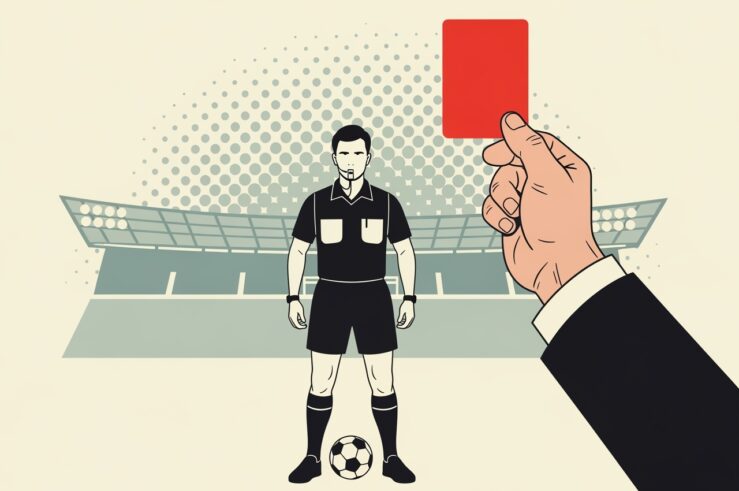
Red Cards for the Referees: EU Competition Law Takes on Football’s Gatekeepers
“A battle for the soul of European football.” That was how the Financial Times characterized the Super League crisis of April 2021, when 12 of Europe’s wealthiest football clubs announced their intention to break away from the existing competition structure and form a closed league of their own. The backlash was immediate: fan protests erupted ... Red Cards for the Referees: EU Competition Law Takes on Football’s Gatekeepers
How Korean Antitrust Lawsuits Are Changing US Regulatory Norms
The antitrust laws are designed to strengthen free-market competition and benefit consumers. But some foreign antitrust lawsuits and new related forms of regulation undermine competition and reduce economic welfare. A prominent recent example is Korean government antitrust lawsuits against U.S. firms, which have reduced U.S. and Korean welfare to the tune of $1 trillion. The ... How Korean Antitrust Lawsuits Are Changing US Regulatory Norms

US Trade Retaliation May Be the Consequence for Imitating the EU’s Digital Rulebook
In a tense meeting room last month in Brussels, U.S. trade negotiators leaned forward and delivered a pointed warning to their European counterparts: “Europe’s digital rules? They’re on the table—if the EU digs in, your exports face consequences.” South Korea now stands on the same precipice. By advancing the proposed Online Platform Monopoly Act (OPMA) ... US Trade Retaliation May Be the Consequence for Imitating the EU’s Digital Rulebook

California Leads the Charge in Systematically Dismantling US Federal Antitrust Law
The California Law Revision Commission (CLRC) is currently reviewing proposed amendments to the state’s antitrust statutes, particularly the Cartwright Act. As made clear in a recently published memo, a major goal of the effort is clearly to distance California from the perceived constraints of federal antitrust law that limit liability for single-firm conduct under Section ... California Leads the Charge in Systematically Dismantling US Federal Antitrust Law

The View from Taiwan: A TOTM Q&A with Andy Chen
Andy, could you please tell us about your professional background? I am a law professor with an SJD degree from Northwestern University in the United States. My field of study is antitrust law and law & economics. From 2007-2010, I served as commissioner of the Taiwan Fair Trade Commission (TFTC). After that, I resumed my ... The View from Taiwan: A TOTM Q&A with Andy Chen

Using Trade Policy to Counter Anti-Suit Injunctions and Strengthen Global Patent Enforcement
Patents are property rights that drive innovation, investment, and economic growth, which are especially critical in technology sectors that rely on global standards. Robust, enforceable patent protections have underpinned America’s technological leadership and economic prosperity by ensuring innovators are rewarded for their investments. These property rights are, however, increasingly threatened by strategic judicial actions from ... Using Trade Policy to Counter Anti-Suit Injunctions and Strengthen Global Patent Enforcement

Five Key Lessons from Abroad for the UK CMA’s Google Search Probe
In the first investigation conducted under the new ex-ante regulatory framework established by the Digital Markets, Competition and Consumers Act (DMCC), the United Kingdom’s Competition and Markets Authority (CMA) is seeking to ascertain whether Google has “strategic market status” (SMS) in the search and search-advertising-services markets. The CMA is also tasked with weighing whether ex-ante ... Five Key Lessons from Abroad for the UK CMA’s Google Search Probe

Kids and Online Safety: An International End-of-Year Review
As the year comes to a close, it is worth reviewing how governments around the world—including at both the state and federal level in the United States—have approached online regulation to protect minors. I will review several of the major legislative and regulatory initiatives, with brief commentary on the tradeoffs involved in each approach. Age ... Kids and Online Safety: An International End-of-Year Review

The View from Korea: A TOTM Q&A with Dae Sik Hong
Professor Hong, could you please tell us a bit more about your background and how you got interested in digital competition regulation? In South Korea, I have unique combined experience as a court judge and as an antitrust specialist at a major law firm, conducting numerous research projects that connect theory and practice. I have ... The View from Korea: A TOTM Q&A with Dae Sik Hong

Reclaiming Antitrust
The United States is the birthplace of antitrust, starting with the enactment of the Sherman Antitrust Act in 1890. During the late 19th and early 20th century, cartels were common in Europe, while U.S. antitrust enforcers unraveled them. Only after World War II did European countries incrementally adopt competition law in various forms. Since that ... Reclaiming Antitrust

Lessons from Korea’s Roller-Coaster Ride Toward Platform (Non)Regulation
The Korea Fair Trade Commission (KFTC), the nation’s competition authority, announced Sept. 9 that it had abandoned plans for comprehensive platform regulation modeled after the European Union’s Digital Markets Act (DMA) or Section 19a of Germany’s Competition Act. The proposed Korean regulation would have involved an ex-ante designation process, alongside stringent prohibitions. The KFTC noted ... Lessons from Korea’s Roller-Coaster Ride Toward Platform (Non)Regulation