Willard, can you tell us a bit about yourself?
I began my career at the Competition and Consumer Protection Commission in Zambia, formerly called the Zambia Competition Commission, starting as a “humble trainee economist.” I quickly rose through the ranks, becoming a senior economist and then the director of mergers and monopolies—achieving this progression in just four years.
Following my work in Zambia, I became the first head of mergers and acquisitions at the COMESA Competition and Consumer Commission (CCCC), formerly the COMESA Competition Commission, a role I started when the commission became operational in January 2013. I was initially the sole staff member in the mergers and acquisitions division. Enforcement of the regional competition law, including merger-control provisions, began immediately, requiring me to simultaneously develop enforcement instruments such as guidelines, operational manuals, terms of reference, and other related aspects of enforcement, and manage other processes and administrative issues. I often reflect on (and wonder) how I managed to juggle all these responsibilities.
Anyway, eight years later, I was appointed chief executive officer of the commission.
My qualifications in both economics and law were a significant comparative advantage in my professional domain.
Tell us a bit about COMESA.
The Common Market for Eastern and Southern Africa (COMESA), which comprises 21 countries, is modeled on the European Union (EU), though its integration is not as deep yet. The acronym is somewhat misleading, as it encompasses a far greater geographic area than just Southern and Eastern Africa, including countries such as Libya, Sudan, Egypt and Tunisia, as well as Indian Ocean islands such as Comoros, Seychelles, Madagascar and Mauritius. This vast region, which covers two-thirds of Africa, has a land mass of more than 12 million square kilometers—significantly larger than the EU—and a population exceeding 640 million people, with a gross domestic product of more than $1 trillion as of 2025.
COMESA’s primary goal is market integration—the same objective as the EU—to prevent businesses from being constrained by isolated national markets. It is founded on the belief that a common or integrated market is essential for growth and for realizing the region’s potential. An initial intention, modeled after the EU’s four freedoms, was to remove rigidities to the free movement of goods and people.
Enforcement of competition law by the commission is a crucial—perhaps the most important—tool in achieving this integration. Similar to the EU, the commission has exclusive jurisdiction over cross-country conduct, creating an effective “one-stop shop” for enforcement. This principle has worked very well so far.
What have been some of the main lessons and challenges for CCCC?
In my view, the difficulty in ensuring the free movement of people is a significant obstacle, as it undeniably hinders both integration efforts and day-to-day business activity across the continent.
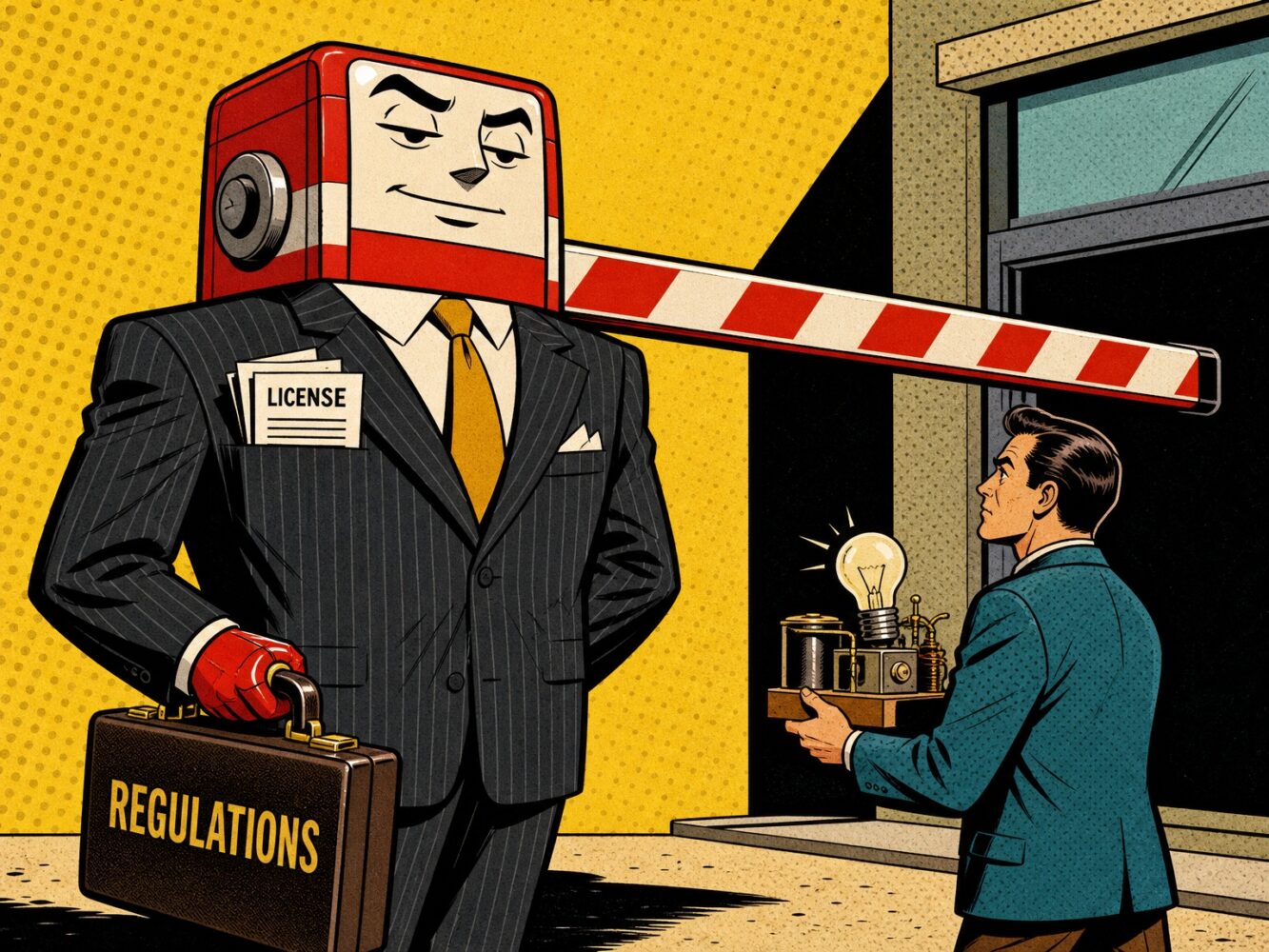
Regarding trade, despite some advancements, governments continue to erect barriers. These are often framed as exceptions to the general rules, but their unintended negative consequences are very real. For instance, we see varying national quotas for what are termed “sensitive products.” We also have complexity within organizations like COMESA, where subregions have their own conflicting regulations. What’s more, restrictions are often more pronounced when moving between different regions of COMESA—i.e., the eastern, northern and southern parts of the region.
The real-world impact of this rigidity became devastatingly clear during the severe drought in East Africa during the 2022-23 season, particularly in Kenya. The resulting grain and soya-cake scarcity caused the price of animal feed to skyrocket, forcing industries to shut down. Although Kenya wanted to import from its East African neighbors, this was difficult because they were similarly affected. During the same period, Southern Africa had good rains and a bumper harvest of grains such as soya beans. However, due to import restrictions in Kenya and export restrictions from Southern African countries such as Zambia, the needed quantities of grain could not easily reach Kenya, leading to debilitating consequences. This systemic rigidity led to small farms failing, industries collapsing and, tragically, even deaths from hunger.
My analysis of the situation points to an underlying cause: These rigid rules— in most cases—benefit powerful private entities. During the drought-induced crisis, for example, the only ones who profited were undertakings within the affected countries that controlled the scarce resources and could inflate prices. For exporting countries such as Zambia, these powerful industries formed lobby groups and successfully influenced governments to implement restrictive “export permits” and “export quotas.” They then essentially controlled the determination of when quotas were met, deciding who could import or export. This, as I see it, is a blatant and naked cartel … right in the face of the government. We appreciate the designation of some agricultural products as “sensitive products” due to a number of public-interest factors that governments may want to address, but such policies should not be implemented to the detriment of the efficient functioning of markets.
However, I remain optimistic. Since 1994, significant progress has been made—an estimated 70% of trade barriers, mostly related to these “sensitive products,” have been abolished. I like to think of it in the following way: “Laws were made by men; they can be changed by them.” I am hopeful that the strong recommendations to remove these deeply harmful provisions will ultimately be adopted.
What does the CCCC deal with? Which powers does it have?
I’d like to point out that our title was recently updated to the COMESA Competition and Consumer Commission, following the enactment of the COMESA Competition and Consumer Protection Regulations (CCCPR) in December 2025, which repealed and replaced the COMESA Competition Regulations of 2004. As you may be aware, our institution has a dual mandate, namely the regulation of competition and the protection of consumers against offensive conduct by market actors. Therefore, the change of name emphasizes and underscores our consumer-protection mandate.
Our core activities are heavily focused on advocacy, which takes up about 60% of what we do. The law specifically tasks us with studying markets to initiate policy changes and advise governments on those changes. We analyze any factor that impacts competition and use that information to inform policy across all COMESA member states.
For instance, we conducted a study on how trade rules affected the growth of small businesses struggling with exports and imports in agricultural markets, with a specific focus on sugar, maize, soya beans, and edible vegetable oil. We were able to identify for governments which specific rules were creating market difficulties.
A good example of our intervention through advocacy was in Eswatini in 2024. An exclusive distributor could not meet the country’s demand for maize grain from Zambia’s SeedCo. SeedCo refused to sell directly due to the exclusivity agreement. Instead of enforcement, we used advocacy, explaining the commercial disadvantages to Zambia and SeedCo. The issue was quickly resolved, ensuring a successful harvest for Eswatini.
Of course, we also conduct numerous enforcement activities, including fines and legal action. High-profile cases have included investigations and fines against the Confederation of African Football, beIN Sports (an Al Jazeera subsidiary), Heineken, Diageo, Coca-Cola, and AB InBev, among others. We’ve also prohibited mergers and issued conditional clearance to various transactions.
What makes us unique is that we are recognized as the only effective multinational competition authority in the Global South whose authority is respected across all its member states.
How is the CCCC’s success or contribution measured? How do you build legitimacy as an agency? How do you measure your impact?
Our enforcement actions have yielded significant results, as demonstrated by some of the actions we have undertaken, which have led to effective enforcement, removal of barriers to entry, cease-and-desist orders that have positively impacted behavior change by businesses, and changes in market structure, thus leading to economic growth.
An example of a significant investigation was into Zambia Airways and its subsequent fining once a breach was established. This action was met with strong approval from government officials; when I presented the findings to the COMESA Council of Ministers, some of the ministers immediately applauded, expressing their relief that action was finally being taken against erring airlines.
A compelling example of our widespread impact is the investigation into the Confederation of African Football (CAF). CAF had established long-term agreements with automatic, long-duration renewal clauses. These clauses required CAF to allow the existing rights holder to match a competitor’s terms two years before the contract’s expiration. This structure effectively excluded other companies from the intermediation market, thereby hindering the growth of commerce and negatively affecting downstream markets.
By intervening and eliminating these restrictive contracts, we facilitated the entry of numerous broadcasters into the common market, which, in turn, led to a reduction in the price of broadcasting rights. Consequently, almost all African countries—some of which were previously unable to broadcast CAF football tournaments due to the unaffordability of the rights for their governments—are now able to do so.
Let’s talk about digital markets. Can you tell us what’s happening on that front?
The COMESA Competition Regulations 2004 were repealed, and a new law was passed on Dec. 4, 2025, which introduced specific provisions dealing with digital markets. Most of the provisions are similar to those in the European Union’s Digital Markets Act (DMA). My view is that the DMA dubiously copies competition-law principles but isn’t a competition law. In the case of COMESA, we have only one law: our competition law, which also has DMA-like provisions to address competition matters in digital markets. Simply put, we were inspired by the DMA and incorporated into our new competition law (Regulation 38 of the COMESA Competition and Consumer Protection Regulations, the CCCPR) principles from the DMA as they relate to gatekeepers.
But a word of caution must be given regarding these DMA-like provisions that introduce an ex ante approach to competition matters in digital markets. There was a lot of excitement when the DMA came. I’ll be honest: sometimes we tend to follow the big brothers, the EU and the United States. This is because we believe that what the EU and the U.S. adopt is always best practice. You guys have led the West so well that we often are persuaded by your jurisprudence and practices. Therefore, when you bring out certain things that are new without taking time to appreciate what they are, the whole world just follows. “If Europe is doing this, it should be OK.”
All we saw was the EU selling a very good story on the DMA. We thought it could be helpful for us. We started thinking about it. We put it into our competition law. However, because it took time for this law to pass—four years—in the process, I attended a number of conferences in Europe and realized that there are many scholars saying this isn’t the way to go. They were speaking about how the DMA is negative to the growth of innovation and the entry of new firms. I then wondered: Did we do the right thing? This could explain why the United States has not adopted the DMA approach. However, I am comforted that the intention of the provisions is to bring sanity to markets, and COMESA can design its bespoke approach to address its unique situation without leading to negative outcomes such as the frustration of innovation.
Our law has now passed.
But if someone asks me, I still think these provisions are important. Why? What will I lose by having these provisions? What harm will I suffer? I don’t think I’ll suffer any harm; I think I would only have advantages in the sense that I now have tools that I didn’t have before.
For example, self-preferencing, tying and bundling, and user lock-in—we can universally accept that, if done by certain undertakings, this is bad conduct.
My view was that having the provision isn’t the problem; it’s how you enforce it or implement it. Enforcement should be reasonable and not rigid. My view is that Europe has become too rigid in its use of the DMA.
It is rigid in the definition of the gatekeeper. It is rigid in the ex ante provisions that don’t allow any justifications. Remember that we’re dealing with technology here. It moves very fast. I think if we come up with these provisions, they should not be very rigid; they should leave room for adapting to changing times and technology. It is my view that there should be enough room to discuss alleged impermissible conduct by gatekeepers, as these are not per se offenses and some of them may result in benefits to society. A balancing act should be undertaken to determine whether the benefit to society outweighs the detriment. But these are just my raw thoughts. What is true is that the application of the DMA or other DMA-like provisions is not universally accepted.
Most of our readers are probably unfamiliar with the African digital economy and landscape. Could you shed some light on the matter?
I note that Africa’s digital economy has generally been on a growing trajectory for the past few years. However, the statistics are not as impressive when compared with the rest of the world. It is therefore important that all conduct, public and private, that hinders the growth of this market should be prohibited. To give you a picture, I will quote some statistics from the World Bank.
The World Bank estimates that by 2030, Sub-Saharan Africa is expected to generate 230 million digital jobs, driven by the rapid expansion of digital services. In 2024, internet penetration in Africa reached 40%, up from 3.2% in 2005. Today, more than 600 million people on the continent use mobile broadband internet. Despite this progress, more than 900 million people remain offline, and 76% face a “usage gap.” They live in areas covered by the network but lack the means or skills to access digital services. In rural areas, access is only 28%.
I observe that the statistics from the World Bank can be buttressed by real-time observations. It is palpable that digital economies have improved lives through job creation, access to financial services and the reduction of inequality. However, while the outlook is positive, growth and sustainability are seriously at risk. I note that most of the firms that operate in this space are transnational dominant companies whose domicile in Africa is not significant, but the effects of their conduct can be devastating, with little or no accountability by the erring companies.
In the COMESA region, we have observed that most of these companies have financial leverage and turnover much higher than the gross domestic products (GDPs) of most of our countries. In this situation, most of these companies feel invincible when they are interrogated regarding anticompetitive conduct. We have also seen in the COMESA region that some of these companies arrogantly threaten to pull out of jurisdictions where they are investigated.
We have also realized, in the COMESA region, that these companies have the ability to engage in conduct such as self-preferencing, tying and steering conduct, restricting access to data and third-party payment systems, among other concerning conduct, which not only frustrates the entry of new firms but also frustrates the growth of companies that are already in the market. Such conduct may have more damaging consequences in the Global South due to limited experience and a lack of sound legal provisions and resources required to investigate such cases.
The new law also has certain sustainability provisions—i.e., provisions aimed at protecting the environment. Can you tell us a bit more about that?
It is indisputable that among the existential threats facing the world today are war and climate change. We are acutely aware that we are not best placed to intervene to prevent geopolitical tensions, as this is beyond us, but we have elected to address one of the most existential threats to the survival of the planet, namely climate change. This is what motivated us to include provisions on environmental concerns in the new regulations. These provisions cover both competition and consumer aspects. To elaborate a bit, in the consideration of mergers, for example, the CCCC will consider whether the merger will lead to environmental damage, environmental benefits, or be environmentally neutral. In all this, greater weight shall be attached to competition factors. Therefore, it is possible that a merger may be rejected where it is established that it results in greater environmental harm despite its pro-competitive benefits.
The approach would be the same when considering applications for authorization of agreements under Regulation 39 of the CCCPR or, generally, investigations of anticompetitive conduct by firms under Chapter Three of the CCCPR. Therefore, the CCCC is likely to reject a pro-competitive agreement where it is clear that it is likely to cause greater harm to the environment than the resulting pro-competitive benefits. Similarly, anticompetitive agreements may be approved if environmental benefits by far outweigh the anticompetitive concerns.
In our desire to ensure that the environment is preserved, the CCCPR now empowers us to intervene where the production or disposal of consumer products is likely to cause harm to the environment. Human beings are consumers of the environment and, therefore, it is imperative that any production method, process or disposal of consumer products that results in environmental degradation should be punished.
When choosing its policy goals—e.g., sustainability, digital, etc.—to what extent is CCCC guided by global trends set by United States and EU?
It is an interesting question that does not have a straightforward answer. I will begin with sustainability issues. Regarding this matter, we were inspired by what the entire world is generally concerned with. You may want to know that the United States has not come out clearly on what its policy is regarding environmental issues. We have seen how the world has fundamentally united to address the consequences of climate change, for example through the United Nations Climate Change Conference (Conference of the Parties, COP). This is what inspired us. I am glad to tell you that I was privileged to speak to the world at COP 30 in November 2025 regarding the role antitrust law can play in addressing climate change concerns and reducing their escalation. I am convinced that we are the first antitrust authority in the world to have introduced express provisions addressing environmental issues in a competition law.
With regard to digital market issues, it is very true that we were inspired by developments in the EU and the United States. We observed that we were not able to investigate similar conduct investigated and punished by our counterparts, particularly in Europe, because our law was insufficient. We observed that the same conduct undertaken by firms in our region was outlawed and punished in other parts of the world. Therefore, to address the lacuna, we amended our law so that the enforcement and policy gap is eliminated.
Is artificial intelligence (AI) on COMESA’s radar?
Yes, AI is seriously on the radar. AI misconduct can be captured using several provisions in our new law. For example, from a competition point of view, it may be captured using our provisions on abuse of dominance, abuse of economic dependence, anticompetitive agreements, cartels (especially algorithmic collusion) or even under merger provisions, depending on the specifics of the case. From a consumer point of view, AI can be addressed under several provisions, such as misrepresentation and provisions on harmful digital content. We are acutely aware that AI is a conduit that can be used to engage in some of these outlawed practices.
We’ve heard a lot about the interplay between competition law and industrial policy. Some suggest that competition laws should be relaxed to create space for national champions. Do you have any thoughts on this matter?
I think it is naive to think that there would be a world that would ever adopt a purist approach to antitrust issues. Antitrust law is just one of the many tools at the disposal of governments to ensure that markets and, ultimately, economies function efficiently. Adopting a purist approach to antitrust enforcement may sometimes not yield the desired outcomes. There are other equally important policies, such as industrial policy, that may come in to address the gap. I look at industrial policy and antitrust policies as complementary rather than pulling in opposite directions. For example, under the CCCPR, when reviewing mergers, the CCCC is guided to consider a number of public-interest factors such as employment, the ability of small and medium-sized businesses to be competitive, the ability of industries in COMESA to be competitive in international markets, innovation considerations, among others.
The above considerations are among the industrial-policy matters that may be important to society. A competition or antitrust law cannot and should not be blind to these considerations, especially for countries in the Global South, where these matters are so pronounced. What is important is to strike a balance so that the protections offered to some industries, for example, are not perpetual, creating a disadvantage to others that may fail to enter or exit the market and leading to the same problem industrial policy would be attempting to address. Therefore, antitrust law and industrial policy should work closely for the benefit of society.
Finally, I’d like to ask you about the future of competition policy in Africa and more generally. Which trends, opportunities, and challenges do you think will mark competition policy in the next five to 10 years?
I think I have a mixed picture for competition policy not just in Africa but the world over. Let me start with Africa. I think there is a positive outlook for competition policy in Africa. We have seen a number of countries adopt competition laws in recent times. Out of 54 countries in Africa, more than 30 countries have now adopted competition laws. The CCCC has been involved in assisting a number of countries to have competition laws on their statute books. We have also seen the emergence of regional competition authorities, among them the CCCC, the East African Community Competition Authority, the West African Economic and Monetary Union (WAEMU) Competition Authorities, the Economic Community of West African States (ECOWAS) and the prospective African Continental Free Trade Area (AfCFTA) Competition Authority. All this is good but may raise challenges if not handled properly. Africa is so broad culturally, geographically, and economically. Therefore, the proliferation of such laws is likely to result in fragmentation of enforcement, duplication, and uncertainty for business. We need to have a harmonization of these laws, and the CCCC has been glad to champion this cause.
For the world generally, I have my own fears. It appears that respect for antitrust laws is declining. We have recently witnessed serious protectionist tendencies that erode the very basis of antitrust laws. We have seen the disregard of these laws on the basis of public-interest or national-security premises. We have witnessed ad hominem attacks by some government officials on competition authority officials when certain objective competition decisions are made. We have seen threats of sanctions against competition authority officials for deciding against some companies. We have seen competition authority heads and officials dismissed simply for making the right decision on competition matters. Cooperation between competition authorities is more lip service than reality, and the situation is becoming more gloomy. These factors worry me, and I can only hope that sense will prevail to reverse this in the coming years.