Showing archive for: “Privacy & Data Security”
We Need to Talk About Privacy Absolutism
Privacy absolutism is the misguided belief that protecting citizens’ privacy supersedes all other policy goals, especially economic ones. This is a mistake. Privacy is one value among many, not an end in itself. Unfortunately, the absolutist worldview has filtered into policymaking and is beginning to have very real consequences. Readers need look no further than ... We Need to Talk About Privacy Absolutism
The Earn IT Act and the Institutional Limits of Congress
As the initial shock of the COVID quarantine wanes, the Techlash waxes again bringing with it a raft of renewed legislative proposals to take on Big Tech. Prominent among these is the EARN IT Act (the Act), a bipartisan proposal to create a new national commission responsible for proposing best practices designed to mitigate the ... The Earn IT Act and the Institutional Limits of Congress

The Negative Externalities of Protecting Privacy
The public policy community’s infatuation with digital privacy has grown by leaps and bounds since the enactment of GDPR and the CCPA, but COVID-19 may leave the most enduring mark on the actual direction that privacy policy takes. As the pandemic and associated lockdowns first began, there were interesting discussions cropping up about the inevitable ... The Negative Externalities of Protecting Privacy
Amazon’s tightrope: Balancing Innovation and competition on Amazon’s Marketplace
The Wall Street Journal reports that Amazon employees have been using data from individual sellers to identify products to compete with with its own ‘private label’ (or own-brand) products, such as AmazonBasics, Presto!, and Pinzon. It’s implausible that this is an antitrust problem, as some have suggested. It’s extremely common for retailers to sell their ... Amazon’s tightrope: Balancing Innovation and competition on Amazon’s Marketplace
Towards an Organ Procurement and Transplantation Network Analogue For Allocation of Emergency Medical Resources
[TOTM: The following is part of a blog series by TOTM guests and authors on the law, economics, and policy of the ongoing COVID-19 pandemic. The entire series of posts is available here. This post is authored by Geoffrey A. Manne, (President, ICLE; Distinguished Fellow, Northwestern University Center on Law, Business, and Economics).] There has been much (admittedly ... Towards an Organ Procurement and Transplantation Network Analogue For Allocation of Emergency Medical Resources
The FTC Still Has a Long Way to Go on its “Common Law” of Data Security
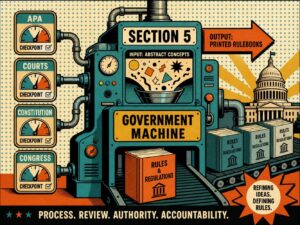
Since the LabMD decision, in which the Eleventh Circuit Court of Appeals told the FTC that its orders were unconstitutionally vague, the FTC has been put on notice that it needs to reconsider how it develops and substantiates its claims in data security enforcement actions brought under Section 5. Thus, on January 6, the FTC ... The FTC Still Has a Long Way to Go on its “Common Law” of Data Security
A New Office of Technology Assessment: The Wrong Answer to the Wrong Question at the Wrong Time
Congress needs help understanding the fast moving world of technology. That help is not going to arise by reviving the Office of Technology Assessment (“OTA”), however. The OTA is an idea for another age, while the tweaks necessary to shore up the existing technology resources available to Congress are relatively modest. Although a new OTA ... A New Office of Technology Assessment: The Wrong Answer to the Wrong Question at the Wrong Time
ICLE Files COPPA Review Comments Arguing the FTC Should Repeal the 2013 Amendments
Today, I filed a regulatory comment in the FTC’s COPPA Rule Review on behalf of the International Center for Law & Economics. Building on prior work, I argue the FTC’s 2013 amendments to the COPPA Rule should be repealed. The amendments ignored the purpose of COPPA by focusing on protecting children from online targeted advertising ... ICLE Files COPPA Review Comments Arguing the FTC Should Repeal the 2013 Amendments
A big year for business and economics in the courts, even if we’re not talking about Janus
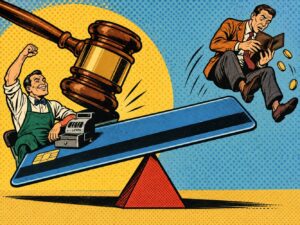
This has been a big year for business in the courts. A U.S. district court approved the AT&T-Time Warner merger, the Supreme Court upheld Amex’s agreements with merchants, and a circuit court pushed back on the Federal Trade Commission’s vague and heavy handed policing of companies’ consumer data safeguards. These three decisions mark a new ... A big year for business and economics in the courts, even if we’re not talking about Janus
For LabMD, the Devil Is in the Not-So-Well Specified Details
The Eleventh Circuit’s LabMD opinion came out last week and has been something of a rorschach test for those of us who study consumer protection law. Neil Chilson found the result to be a disturbing sign of slippage in Congress’s command that the FTC refrain from basing enforcement on “public policy.” Berin Szóka, on the ... For LabMD, the Devil Is in the Not-So-Well Specified Details
FCC-FTC Plans for Welfare-Enhancing Cooperation on Online Consumer Protection
As the Federal Communications (FCC) prepares to revoke its economically harmful “net neutrality” order and replace it with a free market-oriented “Restoring Internet Freedom Order,” the FCC and the Federal Trade Commission (FTC) commendably have announced a joint policy for cooperation on online consumer protection. According to a December 11 FTC press release: The Federal ... FCC-FTC Plans for Welfare-Enhancing Cooperation on Online Consumer Protection
An ambitious AG, a disgruntled competitor, and the contrived antitrust case against Google in Missouri
The populists are on the march, and as the 2018 campaign season gets rolling we’re witnessing more examples of political opportunism bolstered by economic illiteracy aimed at increasingly unpopular big tech firms. The latest example comes in the form of a new investigation of Google opened by Missouri’s Attorney General, Josh Hawley. Mr. Hawley — ... An ambitious AG, a disgruntled competitor, and the contrived antitrust case against Google in Missouri