Showing archive for: “Advertising”
Reserve Judgment: The FTC Takes on Amazon’s Ad Auctions
The price to beat in Amazon’s advertising auctions may not have come from another advertiser at all, according to a lawsuit filed Aug. 31 by the Federal Trade Commission (FTC). In the complaint, the FTC alleges that Amazon quietly set the price itself, promising one pricing rule and using another. That allegation could support a ... Reserve Judgment: The FTC Takes on Amazon’s Ad Auctions

Your Price May Vary: The FTC’s Personalized-Pricing Puzzle
A price that knows your name may be creepy. It may also be a bargain. That ambiguity sits at the heart of the Federal Trade Commission’s (FTC) proposed enforcement policy statement on personalized pricing, which opens with a candid admission: The practice is “not well understood,” and its effects on consumers remain “unclear.” That uncertainty ... Your Price May Vary: The FTC’s Personalized-Pricing Puzzle

Google, the Unruh Act, and the Legal Risk of Knowing Your Audience
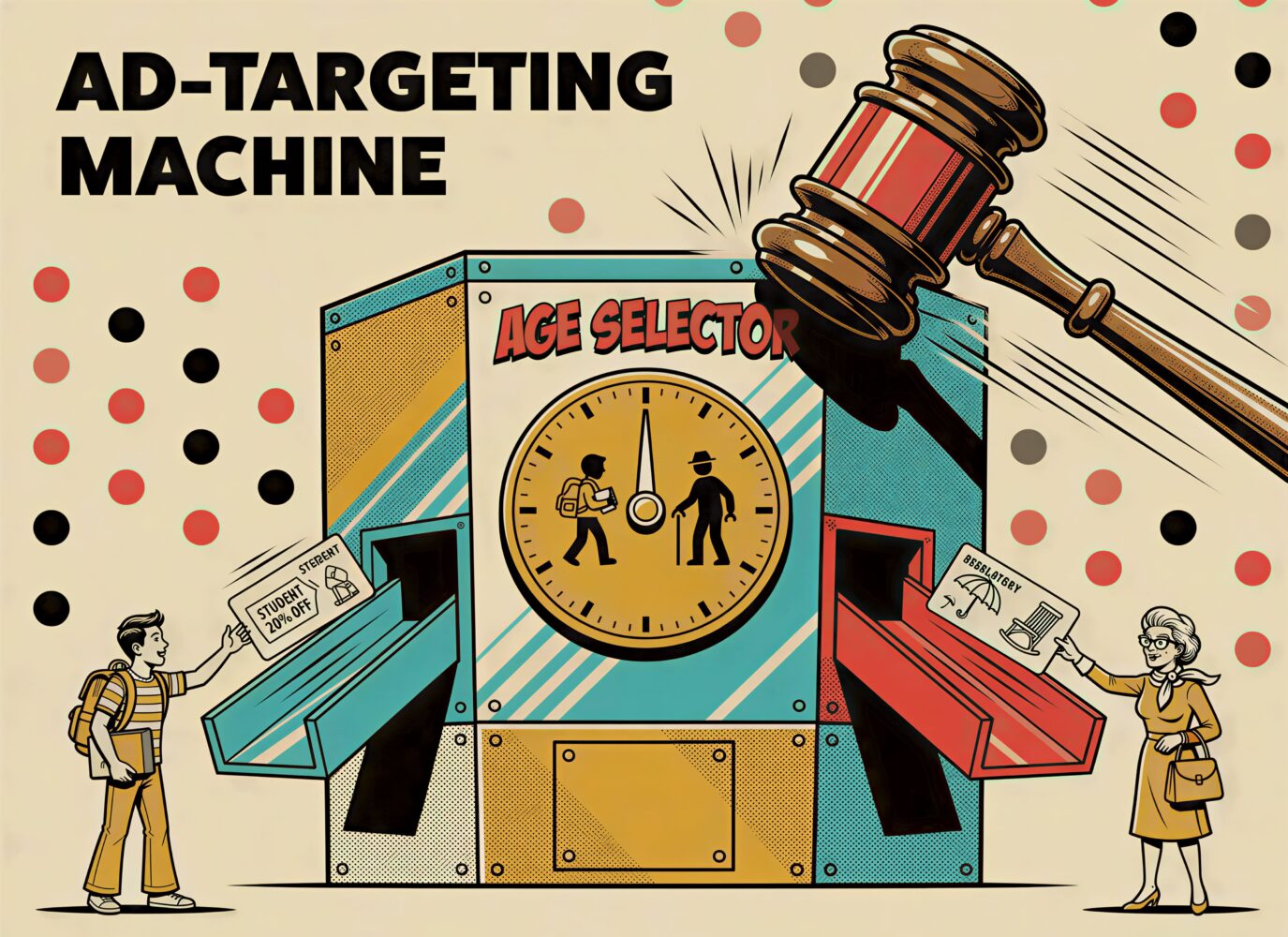
Advertising’s oldest rule is simple: Know your audience. In California, following it may get an online platform sued. Show retirement-home ads to seniors and student discounts to college students, and sensible targeting can suddenly look like unlawful discrimination. That question is now before California’s Sixth Appellate District. The dispute arises from a trial court ruling in ... Google, the Unruh Act, and the Legal Risk of Knowing Your Audience
Fit for Purpose, Unfit for Review: Why the DMA’s First Evaluation Could Never Find Failure
The first review of the Digital Markets Act (DMA) reads less like an evaluation than a wellness check performed by the patient’s proud parent. The pulse is strong. The color is good. Any lingering symptoms? Too early to tell. On April 28, 2026, the European Commission published the review required under Article 53 and declared ... Fit for Purpose, Unfit for Review: Why the DMA’s First Evaluation Could Never Find Failure

Antitrust Standing Room Only
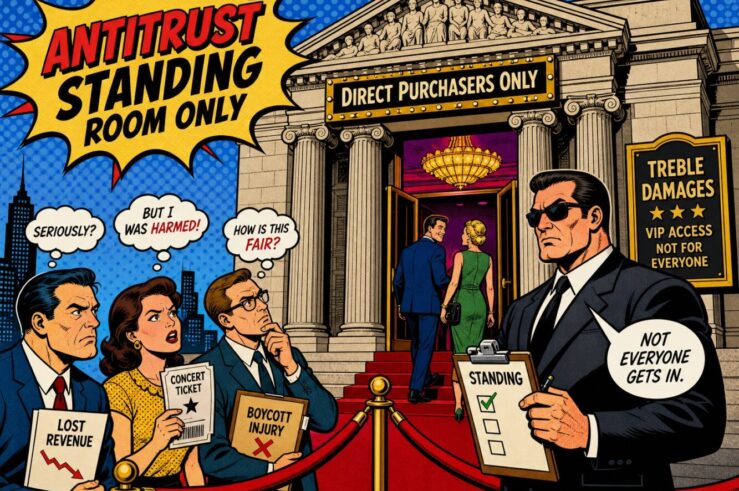
Antitrust law does not hand out damages just because someone got hurt in the general vicinity of an antitrust violation. A plaintiff must show more than bad conduct, more than lost money, and more than a plausible violation of the Sherman Act. The loss must come from the thing antitrust law exists to protect: competition. ... Antitrust Standing Room Only
When a Blue Checkmark Becomes a €120 Million Problem
The European Commission’s first major enforcement action under the Digital Services Act (DSA) offers an early glimpse of how the European Union intends to regulate large digital platforms—and how far that approach may diverge from the U.S. model. The DSA is an EU regulation governing how online intermediary services operate, including social-media platforms, online marketplaces, ... When a Blue Checkmark Becomes a €120 Million Problem

The Google Remedies Decision and Big Tech Antitrust
U.S. District Court Judge Amit Mehta’s Sept. 2 remedies opinion in the U.S. v. Google monopolization (Google Search) case is, in large part, a rejection of government regulation of digital platforms in the guise of antitrust. The limited and cabined conduct-related remedies it imposes are far less significant than its rejection of the U.S. Justice Department’s (DOJ) proposed conduct ... The Google Remedies Decision and Big Tech Antitrust
The EU’s Google Adtech Decision: Structural Remedies by Stealth?
The European Commission’s €2.95 billion decision against Google arrives amid heightened EU-U.S. trade tensions, the Trump administration’s recent criticism of EU tech regulations, internal disagreements within the Commission, and heated commentary on both sides of the Atlantic. But beyond geopolitics, the decision also raises important legal and policy questions. In particular, the Commission’s apparent request ... The EU’s Google Adtech Decision: Structural Remedies by Stealth?
Google Antitrust Remedies Could Harm the US Economy and Consumers
Google and the U.S. Justice Department (DOJ) will make their closing arguments tomorrow in the Google Search remedies trial. Judicial adoption of the DOJ’s recommendations to “break up” Google, stemming from this and another DOJ lawsuit, could seriously undermine American innovation and competitiveness and harm, not help, American consumers. Background The DOJ sued Google in ... Google Antitrust Remedies Could Harm the US Economy and Consumers

The View from Taiwan: A TOTM Q&A with Andy Chen
Andy, could you please tell us about your professional background? I am a law professor with an SJD degree from Northwestern University in the United States. My field of study is antitrust law and law & economics. From 2007-2010, I served as commissioner of the Taiwan Fair Trade Commission (TFTC). After that, I resumed my ... The View from Taiwan: A TOTM Q&A with Andy Chen

The Law & Economics of the First Amendment: Curation, Targeted Advertising, and Access to Online Speech
We at the International Center for Law & Economics (ICLE) filed an amicus brief earlier this month to the U.S. District Court for the Northern District of California in the NetChoice v. Bonta case. It was an updated version of the brief we filed earlier this year before the 9th U.S. Circuit Court of Appeals. ... The Law & Economics of the First Amendment: Curation, Targeted Advertising, and Access to Online Speech

Weighing DOJ’s Proposed Remedies for Google’s Monopolization
The U.S. Justice Department (DOJ) has proposed remedies to a federal judge who held that Google illegally monopolized web search. In reviewing the DOJ’s recommendations, the judge should take into account the downsides of particular remedies, as well as their potential benefits. The judge should be careful not to impose remedies that could reduce innovation ... Weighing DOJ’s Proposed Remedies for Google’s Monopolization