Showing archive for: “Payments & Payment Networks”
Capital Confusion at the New York Times
In a recent guest essay for The New York Times, Aaron Klein of the Brookings Institution claims that the merger between Capital One and Discover would “keep intact the broken and predatory system in which credit card companies profit handsomely by rewarding our richest Americans and advantaging the biggest corporations.” That’s quite an indictment! Fortunately, Klein also ... Capital Confusion at the New York Times

The FT Misunderstands the Economics of Credit-Card Markets
In a recent piece for the Financial Times, Brendan Greeley argues that the misnamed Credit Card Competition Act would reduce inflation. In it, Greeley recycles numerous myths about the nature of credit-card markets that have long been rebutted by serious economic research. Both theory and ample evidence from the United States and other countries shows ... The FT Misunderstands the Economics of Credit-Card Markets
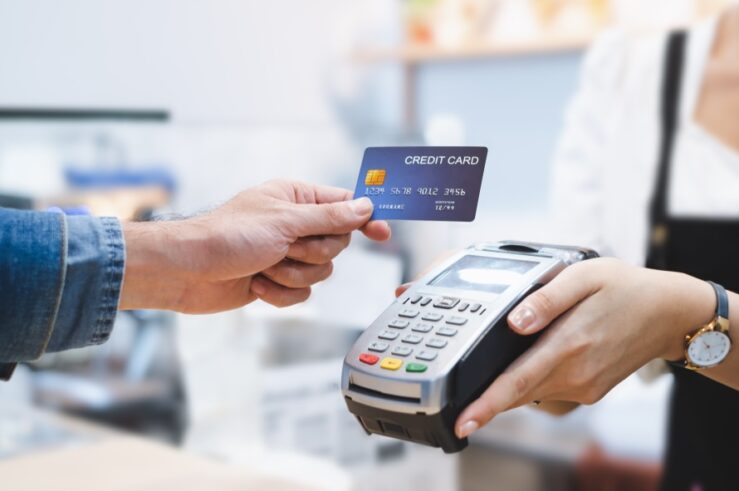
The Paradoxical Perils of Mandatory ‘Competition’ in Merchant Routing of Credit-Card Transactions
Sen. Richard Durbin (D-Ill.) earlier this month introduced legislation that aims to manufacture competition in the routing of credit-card transactions. If enacted, the measure would require that merchants be able to choose from at least two networks when processing most credit-card transactions. While this would result in competition over routing, it would harm other forms ... The Paradoxical Perils of Mandatory ‘Competition’ in Merchant Routing of Credit-Card Transactions

Pixtopia Is Not Real
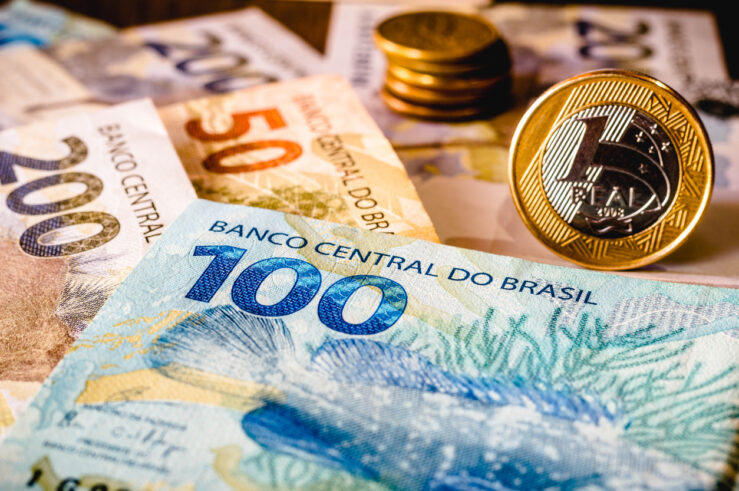
Banco Central do Brasil (BCB), Brazil’s central bank, launched a new real-time payment (RTP) system in November 2020 called Pix. Evangelists at the central bank hoped that Pix would offer a low-cost alternative to existing payments systems and would entice some of the country’s tens of millions of unbanked and underbanked adults into the banking ... Pixtopia Is Not Real
Doubling Down on Durbin Disaster: Interchange Fee Caps Shortchange Consumers
The U.S. economy survived the COVID-19 pandemic and associated government-imposed business shutdowns with a variety of innovations that facilitated online shopping, contactless payments, and reduced use and handling of cash, a known vector of disease transmission. While many of these innovations were new, they would have been impossible but for their reliance on an established ... Doubling Down on Durbin Disaster: Interchange Fee Caps Shortchange Consumers
The Klobuchar Bill’s Not-So-Bright Lines for Antitrust Scrutiny
In a recent op-ed, Robert Bork Jr. laments the Biden administration’s drive to jettison the Consumer Welfare Standard that has formed nearly half a century of antitrust jurisprudence. The move can be seen in the near-revolution at the Federal Trade Commission, in the president’s executive order on competition enforcement, and in several of the major ... The Klobuchar Bill’s Not-So-Bright Lines for Antitrust Scrutiny
Ajit Pai and Risk-Taking at the FCC
It would be impossible to describe Ajit Pai’s tenure as chair of the Federal Communications Commission as ordinary. Whether or not you thought his regulatory style or his policies were innovative, his relationship with the public has been singular for an FCC chair. His Reese’s mug, alone, has occupied more space in the American media ... Ajit Pai and Risk-Taking at the FCC
It’s All About What We Don’t Know
Nicolas Petit’s Big Tech and the Digital Economy: The Moligopoly Scenario provides an insightful and valuable antidote to this unease. While neither Panglossian nor comprehensive, Petit’s analysis persuasively argues that some of the concerns about the platforms are misguided or at least overstated. As Petit sees it, the platforms are not so much monopolies in ... It’s All About What We Don’t Know
A Law & Economics Perspective on Ruth Bader Ginsburg
With the passing of Justice Ruth Bader Ginsburg, many have already noted her impact on the law as an advocate for gender equality and women’s rights, her importance as a role model for women, and her civility. Indeed, a key piece of her legacy is that she was a jurist in the classic sense of ... A Law & Economics Perspective on Ruth Bader Ginsburg
The Myth of the Cyber Barons
During last week’s antitrust hearing, Representative Jamie Raskin (D-Md.) provided a sound bite that served as a salvo: “In the 19th century we had the robber barons, in the 21st century we get the cyber barons.” But with sound bites, much like bumper stickers, there’s no room for nuance or scrutiny. The news media has ... The Myth of the Cyber Barons
Income-contingent Loans as a COVID Policy Backstop
[TOTM: The following is part of a blog series by TOTM guests and authors on the law, economics, and policy of the ongoing COVID-19 pandemic. The entire series of posts is available here. This post is authored by Sam Bowman, (Director of Competition Policy, ICLE).] No support package for workers and businesses during the coronavirus shutdown can be ... Income-contingent Loans as a COVID Policy Backstop
Goodhart and Bad Policy
[TOTM: The following is part of a blog series by TOTM guests and authors on the law, economics, and policy of the ongoing COVID-19 pandemic. The entire series of posts is available here. This post is authored by Eric Fruits, (Chief Economist, International Center for Law & Economics).] Wells Fargo faces billions of dollars of ... Goodhart and Bad Policy