Showing archive for: “Gig Economy”
FTC Biweekly UMC Roundup – Refugee from the FTC Edition
Faithful and even occasional readers of this roundup might have noticed a certain temporal discontinuity between the last post and this one. The inimitable Gus Hurwitz has passed the scrivener’s pen to me, a recent refugee from the Federal Trade Commission (FTC), and the roundup is back in business. Any errors going forward are mine. ... FTC Biweekly UMC Roundup – Refugee from the FTC Edition
FTC on the Gig Economy: The Glass is Almost Empty
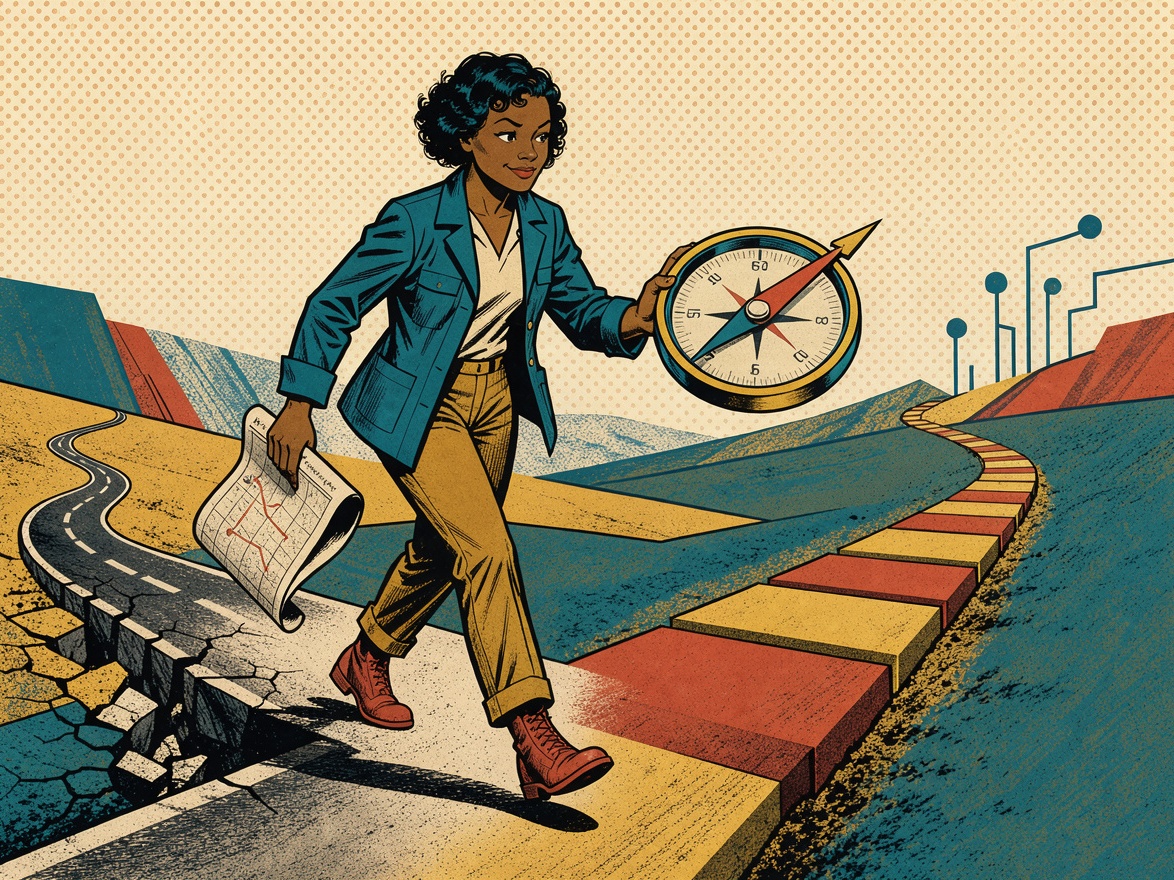
The business press generally describes the gig economy that has sprung up around digital platforms like Uber and TaskRabbit as a beneficial phenomenon, “a glass that is almost full.” The gig economy “is an economy that operates flexibly, involving the exchange of labor and resources through digital platforms that actively facilitate buyer and seller matching.” ... FTC on the Gig Economy: The Glass is Almost Empty

The Market Challenge to Populist Antitrust
The wave of populist antitrust that has been embraced by regulators and legislators in the United States, United Kingdom, European Union, and other jurisdictions rests on the assumption that currently dominant platforms occupy entrenched positions that only government intervention can dislodge. Following this view, Facebook will forever dominate social networking, Amazon will forever dominate cloud ... The Market Challenge to Populist Antitrust

The Contestable Platform Paradox
Why do digital industries routinely lead to one company having a very large share of the market (at least if one defines markets narrowly)? To anyone familiar with competition policy discussions, the answer might seem obvious: network effects, scale-related economies, and other barriers to entry lead to winner-take-all dynamics in platform industries. Accordingly, it is ... The Contestable Platform Paradox

Antitrust Dystopia and Antitrust Nostalgia
The dystopian novel is a powerful literary genre. It has given us such masterpieces as Nineteen Eighty-Four, Brave New World, and Fahrenheit 451. Though these novels often shed light on the risks of contemporary society and the zeitgeist of the era in which they were written, they also almost always systematically overshoot the mark (intentionally ... Antitrust Dystopia and Antitrust Nostalgia
Antitrust Statutorification
A lot of water has gone under the bridge since my book was published last year. To close this symposium, I thought I would discuss the new phase of antirust statutorification taking place before our eyes. In the United States, Congress is working on five antitrust bills that propose to subject platforms to stringent obligations, ... Antitrust Statutorification
Alston Decision Shows Consumer Welfare Standard Isn’t Broken
From Sen. Elizabeth Warren (D-Mass.) to Sen. Josh Hawley (R-Mo.), populist calls to “fix” our antitrust laws and the underlying Consumer Welfare Standard have found a foothold on Capitol Hill. At the same time, there are calls to “fix” the Supreme Court by packing it with new justices. The court’s unanimous decision in NCAA v. ... Alston Decision Shows Consumer Welfare Standard Isn’t Broken

Rebuilding Trust in Coronaworld
Governments are beginning to lift the lockdowns they imposed to slow the spread of COVID-19. That is a good thing. But simply lifting the restrictions won’t immediately take us back to normality. For that to happen requires a massive investment in mechanisms that will rebuild trust. Prior to COVID-19, people implicitly trusted that travelling on ... Rebuilding Trust in Coronaworld
Cooperation, Competition, and COVID-19
Cooperation is the basis of productivity. The war of all against all is not a good model for any economy. Who said it—a rose-emoji Twitter Marxist, or a card-carrying member of the laissez faire Chicago School of economics? If you guessed the latter, you’d be right. Frank Easterbrook penned these words in an antitrust ... Cooperation, Competition, and COVID-19
Income-contingent Loans as a COVID Policy Backstop
[TOTM: The following is part of a blog series by TOTM guests and authors on the law, economics, and policy of the ongoing COVID-19 pandemic. The entire series of posts is available here. This post is authored by Sam Bowman, (Director of Competition Policy, ICLE).] No support package for workers and businesses during the coronavirus shutdown can be ... Income-contingent Loans as a COVID Policy Backstop
Base Small Business Support on their Economic Realities
[TOTM: The following is part of a blog series by TOTM guests and authors on the law, economics, and policy of the ongoing COVID-19 pandemic. The entire series of posts is available here. This post is authored by Mark Jamison, (Director and Gunter Professor, Public Utility Research Center, University of Florida and Visiting Scholar with the American Enterprise ... Base Small Business Support on their Economic Realities
What Has Big Tech Ever Done for Us? Part Two
[TOTM: The following is part of a blog series by TOTM guests and authors on the law, economics, and policy of the ongoing COVID-19 pandemic. The entire series of posts is available here. This post is authored by Dirk Auer, (Senior Researcher, Liege Competition & Innovation Institute; Senior Fellow, ICLE).] Across the globe, millions of ... What Has Big Tech Ever Done for Us? Part Two