Showing archive for: “Innovation & Entrepreneurship”
AI’s Scientific Ethos and the Moat That Wouldn’t Hold
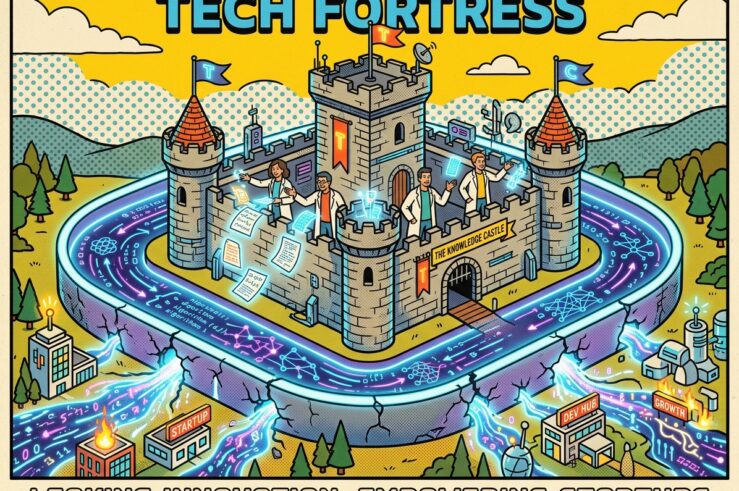
Google may have built the foundation of the modern AI economy—and then published the instructions. In 2017, eight researchers across Google’s Brain and Research divisions released a paper titled “Attention Is All You Need.” What followed is now familiar: a technological inflection point, rapid diffusion, and an explosion of competitors building on the same core ... AI’s Scientific Ethos and the Moat That Wouldn’t Hold
Too Much Order, Too Soon: The Case Against AI Term Sheets
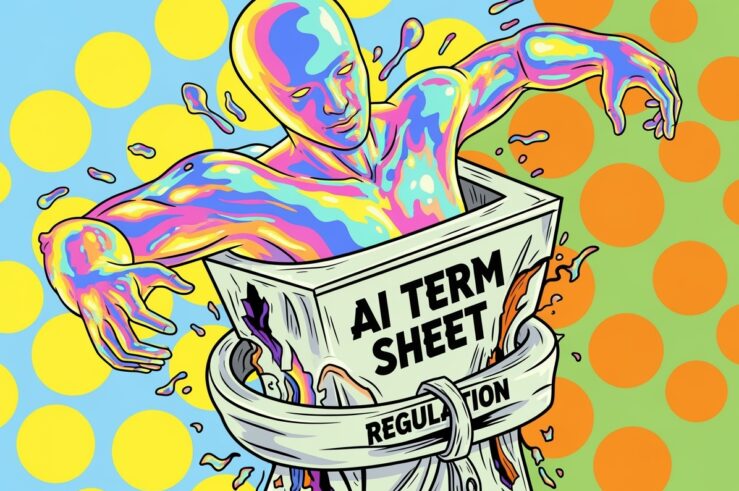
Washington may be closing in on an AI “term sheet.” The industry, meanwhile, is already writing its own rules. Recent commentary suggests U.S. artificial intelligence (AI) policy may be coalescing around a federal framework. A widely discussed Tech Policy Press piece argues that a short “term sheet” emerging from negotiations between the White House and ... Too Much Order, Too Soon: The Case Against AI Term Sheets
Schrödinger’s Quantum Market: Regulating What May or May Not Exist
Competition authorities are gearing up to regulate quantum computing. The problem: there is no market there yet. In March 2026, the Italian Competition Authority (AGCM) launched an “IC59 fact-finding inquiry” into quantum, citing concerns that ongoing developments could shape long-term competition. Drawing on lessons from artificial intelligence (AI) and cloud markets, the AGCM flagged familiar ... Schrödinger’s Quantum Market: Regulating What May or May Not Exist

The Fatal Conceit of Cheap Drugs
The U.S. Supreme Court agreed to hear Hikma v. Amarin to answer a narrow question. It may end up saying far more about how policymakers misunderstand pharmaceutical markets. On its face, the case is narrow. It asks whether a generic drug manufacturer can face liability for inducing patent infringement based on how it markets a ... The Fatal Conceit of Cheap Drugs

A Sensible Federal Framework for AI (If Congress Can Stick to It)
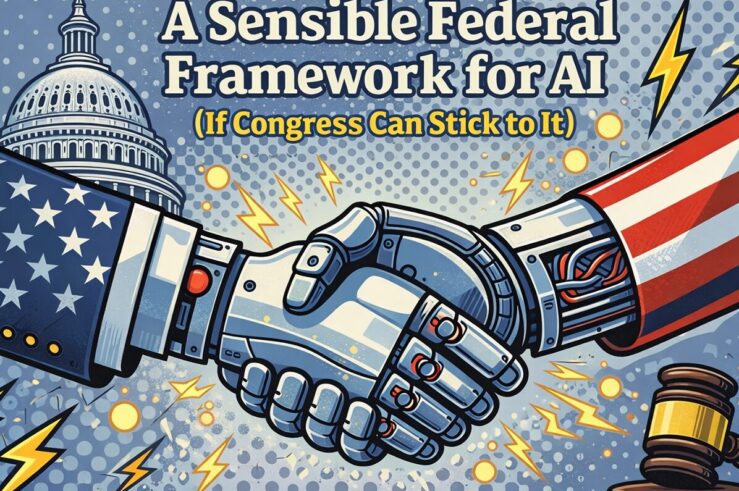
The Trump administration’s newly released national legislative framework for artificial intelligence is, in many respects, a welcome set of guidelines for US regulation of Artificial Intelligence (AI). At a moment when AI policy risks collapsing into either overbroad precaution or fragmented state-level experimentation, the framework instead gestures toward something closer to institutional restraint: a light-touch ... A Sensible Federal Framework for AI (If Congress Can Stick to It)
Borrowed Prices: Pharmaceuticals and the American Tab
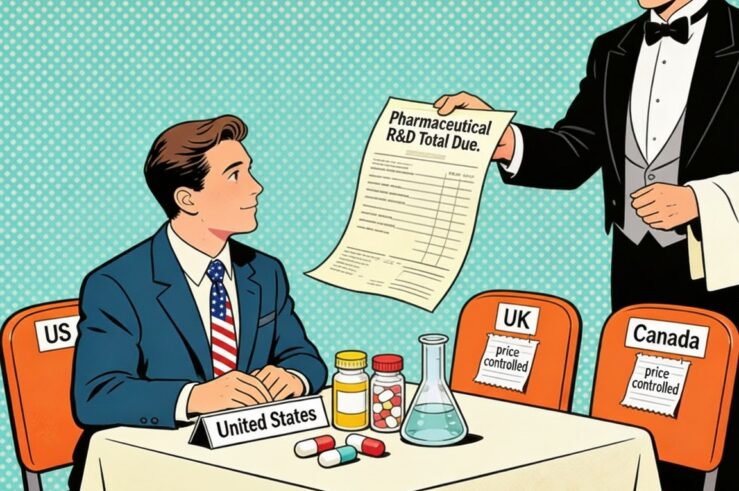
The Centers for Medicare & Medicaid Services (CMS) has proposed two sweeping Innovation Center models—the Global Benchmark for Efficient Drug Pricing Model (GLOBE) and the Guarding U.S. Medicare Against Rising Drug Costs Model (GUARD)—that would tie Medicare drug payments to prices set by foreign governments. Framed as pragmatic cost-containment tools, the models would import foreign ... Borrowed Prices: Pharmaceuticals and the American Tab
Europe Can’t Decouple Its Way to Power
Europe is experiencing a bout of geopolitical vertigo. With Donald Trump having once again floated the purchase of Greenland and threatened tariffs against his European allies, the transatlantic relationship looks more fragile than at any point in recent memory. NATO may yet survive the strain, but hoping for a return to predictability is no longer ... Europe Can’t Decouple Its Way to Power

The View from Africa: A TOTM Q&A with Willard Mwemba
Willard, can you tell us a bit about yourself? I began my career at the Competition and Consumer Protection Commission in Zambia, formerly called the Zambia Competition Commission, starting as a “humble trainee economist.” I quickly rose through the ranks, becoming a senior economist and then the director of mergers and monopolies—achieving this progression in ... The View from Africa: A TOTM Q&A with Willard Mwemba

AI, Entrepreneurialism, and the Next Technological Ecosystem
Debates about artificial intelligence often focus on the technology’s intrinsic qualities, such as its speed, scale, and uncanny ability to generate text or code. But the lesson we should draw from every major technological transition since World War II has been that economic outcomes are not determined by technology alone. The institutional framework surrounding those ... AI, Entrepreneurialism, and the Next Technological Ecosystem

Beyond a Moratorium: Toward a Competency-Based Approach to AI Governance
As state legislatures across the country prepare to convene in early 2026, a predictable panic is setting in among the architects of the artificial-intelligence (AI) revolution. From Sacramento to Hartford, legislation appears certain to proliferate seeking to regulate everything from algorithmic discrimination to the fundamental compute power used to train large language models (LLMs). The ... Beyond a Moratorium: Toward a Competency-Based Approach to AI Governance
The Competitive Chaos Behind Moore’s Law
Semiconductors are everywhere. They power your phone, your car, your refrigerator. They enable AI models, cloud computing, and modern manufacturing. Advanced chips control weapons systems, telecommunications networks, and financial infrastructure. No technology is more central to modern economic activity. This makes competition in semiconductor manufacturing a question of enormous importance. Yet the industry presents a ... The Competitive Chaos Behind Moore’s Law

Nobel Prize Winners’ Work Supports Dynamic Antitrust Enforcement
Antitrust should center on dynamic market forces that drive major technological change, rather than on static “big is bad” market analysis, based on the work of the 2025 economics Nobel Prize winners. Antitrust enforcers in the United States and around the world could benefit by incorporating these insights into their policy development. Focus on Dynamic ... Nobel Prize Winners’ Work Supports Dynamic Antitrust Enforcement