A key pillar of the second Trump administration’s economic program is regulatory reform. The U.S. Justice Department’s (DOJ) newly launched Anticompetitive Regulations Task Force is a positive first step toward unraveling harmful anticompetitive federal and state regulations that slow economic growth and harm American families.
The task force will, nevertheless, face serious challenges. An administration emphasis on generating public support for regulatory reforms directed at pocketbook issues might prove helpful. Attention also could be paid to dismantling foreign anticompetitive market distortions in order to augment the benefits the task force achieves.
Background
The history of regulatory-reform initiatives has been bipartisan. Surface and air-transportation rate deregulation passed Congress with strong Democratic and Republican support under President Jimmy Carter. Office of Management and Budget cost-benefit review of major proposed regulations was developed, expanded, and modified through executive orders issued by Democratic and Republican presidents, from Carter to Trump.
Most recently, various executive orders promulgated by President Donald Trump during his first and second terms have called for eliminating numerous existing regulations as a key part of his efforts to shrink the administrative state.
Excessive regulations often impose costs by harming the competitive process. As regulatory expert Casey Mulligan of the University of Chicago has explained in congressional testimony, regulations may distort competition and impose major cost burdens that are not directly observable:
[M]ere clerical “red tape” is merely the tip of the regulatory-cost iceberg. Complying with a regulation often involves high opportunity costs (foregone opportunities for businesses to trade, innovate, and realize their full potential). Moreover, “many rules protect a type of business from competition, sometimes by erecting barriers to new market participants and other times by outright prohibiting competing goods and services.” This skews market outcomes, reducing market-generated economic benefits.
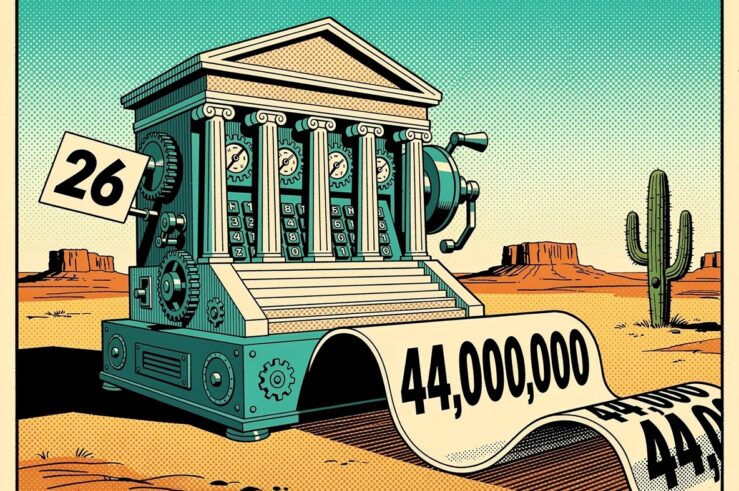
Recent economic research quantifies the enormity of the hidden regulatory cost burdens imposed on American businesses and households. For example, economists Mark Crain and Nicole Crain have calculated that:
[F]ederal regulations cost an estimated $12,800 per employee per year in 2022 (in 2023 dollars). Small firms with fewer than 50 employees incur regulatory costs of $14,700 per employee per year – 20% greater than the cost per employee in large firms ($12,200).
In his congressional testimony, Mulligan estimated additional costs of $5,000 per-household per-year for rules finalized in 2021 and 2022. He also calculated a higher household regulatory burden of $40,000 over eight years, if the 2021-2022 trend continued.
State-level regulations also impose similar types of costly regulatory burdens on businesses, households, and the economy.
New DOJ Task Force
According to a March 27 DOJ press release, the new task force’s mission is “to advocate for the elimination of anticompetitive state and federal laws and regulations that undermine free market competition and harm consumers, workers, and businesses.” Specifically, “[t]he Task Force will surge resources to these efforts and invite public comments to support the Administration’s mission to unwind laws and regulations that hinder business dynamism and make markets less competitive.”
Consistent with recent Trump executive orders on regulatory reform, the task force “will support federal agencies’ deregulatory initiatives by sharing its market expertise on regulations that pose the greatest barriers to economic growth.”
A key element of the initiative will be to evaluate public comments. In particular, the DOJ Antitrust Division “will seek information from the public about laws and regulations that make it more difficult for businesses to compete effectively, especially in markets that have the greatest impact on American households,” including “housing, transportation, food and agriculture, health care, and energy.” The comment period will be open for 60 days and submissions will be posted online.
[T]he Task Force [also] will bring together attorneys, economists, and other staff from across the Division, together with interagency partners, to identify state and federal laws and regulations that unnecessarily harm competition. The Antitrust Division will then take appropriate action, including helping agencies revise or eliminate these regulations.
Furthermore, to advocate removing anticompetitive laws and regulations, the Antitrust Division will:
- file statements of interest in private litigation; and
- provide comments on proposed legislation in the states at the request of state legislators.
Prospects for Reform
The two federal antitrust agencies—the DOJ and the Federal Trade Commission (FTC)—have a long history of serving as competition advocates by working with agencies to identify and eliminate unnecessary regulations. The DOJ also has provided technical assistance and training to federal agencies to help them analyze how new and existing regulations might affect competition, or whether competition may be a better alternative to regulation.
These initiatives have occurred under both Democratic and Republican administrations. Nevertheless, this task force represents something new. It marks a shift in emphasis from the Biden administration, which prioritized regulatory expansion rather than regulatory reform.
It also goes beyond standard regulatory critiques by spotlighting the link between overregulation and anticompetitive harm. This provides Antitrust Division a well-defined leading role in supporting Trump’s regulatory-reform agenda. Other federal agencies will take note and be expected to respond to the DOJ’s advice.
This does not mean that the task force will find it easy to achieve tangible results. Far from it. “Competition advocacy” confronts serious challenges, and success is not assured. Beneficiaries of anticompetitive regulations may be expected to lobby against proposed reforms. Congressional supporters of affected interest groups that oppose deregulatory change may block legislation.
Proposals to reform or to eliminate specific rules are likely to face immediate lawsuits with uncertain outcomes, although recent Supreme Court holdings provide new support for striking down overly broad rules. Moreover, the DOJ Antitrust Division is already subject to tight resource constraints in enforcing the antitrust laws, which will limit the resources that may be devoted to regulatory reform work.
Notwithstanding these limitations, there is good reason for the administration to press ahead aggressively and strongly support the task force. Given the huge benefits of dismantling anticompetitive overregulation (which may dwarf the benefits of standard antitrust prosecutions), supplemental appropriations to support task-force recommendations may be warranted.
Finally, a concerted administration effort to generate public support for dismantling specific anticompetitive regulations that hit Americans’ pocketbooks hardest might yield sufficient congressional support to overcome special-interest pleadings.
Challenging Anticompetitive Market Distortions
Regulatory harms to Americans also come from overseas. Anticompetitive market distortions (ACMDs) created by foreign governments impose huge costs on the United States by limiting opportunities for American businesses in the dynamic global economy.
The task force will not address foreign ACMD harms. The DOJ Antitrust Division and FTC could, however, be assigned to work with the federal trade agencies and the U.S. State Department to help identify and estimate the magnitude of foreign ACMDs.
The Trump administration might also consider developing an anti-ACMD strategy that could involve imposing special tariffs calibrated to the size of specific distortions. It could also enter into multilateral negotiations with a “coalition of willing nations” to establish commitments to dismantle ACMDs.
Short of that, important U.S. trading partners might agree on imposing parallel sanctions on China, which imposes by far the costliest ACMDs. The international competitiveness of America’s innovative industries is at-risk from Chinese government actions that distort markets to favor Chinese competitors.
The administration has taken a promising first step in prioritizing regulatory reform within the bureaucracy. One hopes that tangible results will follow.