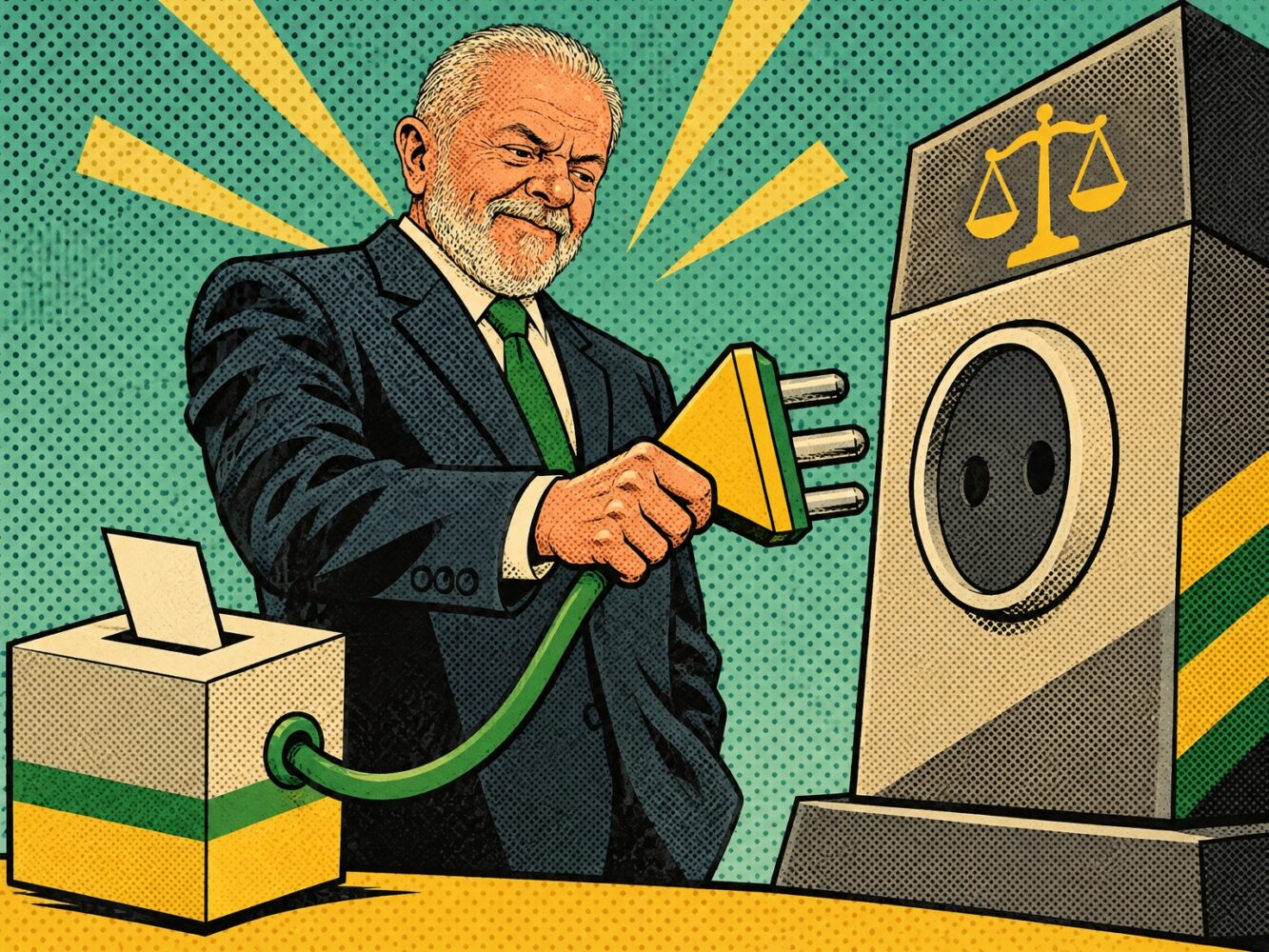
Brazil’s president has complaints about how digital platforms handled the election he just won. His administration’s proposed remedy? Give the competition regulator more power. The missing step is explaining what one has to do with the other.
The legislative timing is easier to explain. Brazil’s 2026 elections gave President Luiz Inácio Lula da Silva a fourth term, which he spend having to contend with an even more right-leaning Congress. Lula has already struggled to advance key legislation, and the bargaining will only get harder when the new Congress takes office in February 2027. His administration has good reason to push its priorities through the outgoing legislature while it can.
Among those priorities is Bill 4,675/2025, which would expand the powers of Brazil’s competition authority, the Administrative Council for Economic Defense (CADE), to regulate digital platforms. Government officials and the lawmaker overseeing the bill want it passed before year’s end, while the legislative arithmetic still looks favorable. The Chamber of Deputies has now placed it on the voting calendar, with a vote expected Nov. 17.
Lula laid out his grievances in his victory speech:
This was an election in which we had to overcome interference coming from outside the country through digital platforms, which we will have to regulate. It is not possible for us not to recognize that a crime in the digital world must be treated the same as a crime in real life. We cannot have monstrously large companies, making billions and billions, paying no taxes to this country, and trying to steer this country’s electoral outcome.
Those are complaints about online crime, taxation, and alleged foreign interference in elections. None, on its own, establishes that competition has failed—or that competition regulation offers a remedy.
Yet that’s the tool his administration is reaching for. Bill 4,675/2025 would let CADE designate digital platforms as “systemically relevant”—a special regulatory status based on their economic size and influence—and impose obligations on how they do business. Giving CADE more power over digital competition wouldn’t address Lula’s complaints about crime, taxes, or election interference. Those complaints may support a debate about electoral regulation, but they don’t explain why Brazil needs this bill.
A Political Grievance in Antitrust Clothing
Supporters also cite concerns about how platforms distribute political content, whether they treat candidates equally, and how clearly they explain those decisions. Those concerns call for scrutiny of electoral fairness and compliance with existing rules for political communication, but they don’t by themselves show that platforms have harmed competition. Treating expanded CADE powers as the answer risks turning competition law into a vehicle for objectives unrelated to protecting competition.
Even as proponents invoke democracy and transparency, they leave unclear what political outcomes they expect competition regulation to deliver. Bill 4,675/2025 would let regulators impose special requirements on selected companies without first showing that they broke the law. Giving regulators that discretion raises concerns about arbitrary enforcement, particularly when political disputes help justify the new powers. Supporters might argue that greater competition would reduce platforms’ influence over political debate, but they need to explain how—and provide evidence.
CADE’s proposed “special obligations” include interoperability (requiring services to work with one another), data sharing, and mandates against discriminatory treatment. These measures aim to help rivals enter the market, but they don’t by themselves create competitors or guarantee that consumers will switch services. They can also impose substantial compliance costs, disrupt platform design, and weaken incentives to invest in features users value. Requiring platforms to open their infrastructure to competitors can introduce security and privacy risks, particularly when services must exchange sensitive user data. Such obligations may make sense in particular circumstances, but regulators need to demonstrate that they would improve competition rather than simply assume it.
Existing antitrust law, meanwhile, already gives CADE tools to address threats to competition—and the agency has shown it will use them against major technology companies. In January 2026, CADE opened an investigation into whether Meta’s WhatsApp Business terms restricted third-party artificial intelligence providers. It also imposed an interim measure—a temporary order while the investigation proceeds—which its tribunal later upheld. Whatever the case’s merits, it shows that CADE can already target specific, potentially exclusionary conduct under existing law. It doesn’t need another layer of digital-market obligations to act.
Use Electoral Law for Electoral Disputes
Brazil also already has institutions charged with protecting electoral integrity. During the presidential campaign, the Superior Electoral Court (TSE) ordered Meta to explain its treatment of political content and advertising following allegations that it treated candidates unequally. Whatever those allegations’ merits, the proceedings show that Brazil can address electoral disputes through laws and institutions designed for that purpose.
If political advertising or platform transparency needs additional safeguards, lawmakers should debate them openly and legislate accordingly. Competition law shouldn’t serve as a back door for political regulation.