Showing archive for: “Clayton Act”
Whoa There, Big Fellows!
The DoJ/FTC revised merger guidelines, released as a draft for public comment yesterday, have me scratching my head. I need to spend more time with them before I come to any strong views, but the obvious issue-spotter is the elimination of market definition as a necessary step in the analysis. So we all know that ... Whoa There, Big Fellows!

An Interesting Patent Holdup Decision out of the Central District of CA: Vizio v. Funai
Readers may recall we highlighted the Vizio v. Funai complaint about a year ago, in large part because it involved antitrust and standard setting issues. The case involves allegations that Funai breached a FRAND commitment, and thus, is an important decision in the debate over the appropriate scope of Section 2 in cases involving alleged ... An Interesting Patent Holdup Decision out of the Central District of CA: Vizio v. Funai
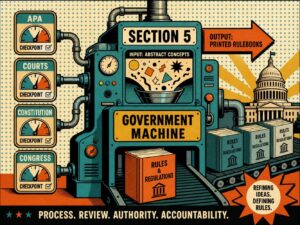
The Case Against the Section 5 Case Against Intel (Cross-Posted)
Antitrust & Competition Policy Blog is hosting a symposium on The Role of FTC Act Section 5 in Light of Intel. Today’s contributions include Dan Crane (Michigan), Keith Hylton (BU), Bob Lande (Baltimore) and me. Up tomorrow will be TOTM’s Geoff Manne, Sean Heather (US Chamber), and Herbert Hovenkamp (Iowa). My contribution is available here, ... The Case Against the Section 5 Case Against Intel (Cross-Posted)
Features v. Bugs: Intel and the Relationship Between Sections 2 and 5
There will be much to say about the Federal Trade Commission’s Intel complaint in the coming months. And we’ve said quite a bit already. But having just read the complaint and the statements from Chairman Leibowitz and Commissioner Rosch discussing the various rationales for making Section 5 the primary hook for this case, I wanted ... Features v. Bugs: Intel and the Relationship Between Sections 2 and 5
The Guidelines Should Be Revised to Reject the PNB Structural Presumption
Yes, the Merger Guidelines should be revised. The Guidelines primary purpose is to “articulate the analytical framework the Agency applies in determining whether a merger is likely substantially to lessen competition.” While the Guidelines have been very successful in articulating a useful economic framework for analyzing mergers, their performance in terms of satisfying that goal ... The Guidelines Should Be Revised to Reject the PNB Structural Presumption
Merger Enforcement Without Market Definition?
The Horizontal Merger Guidelines have brought discipline to the unruly world of merger analysis; but have also accommodated advances in our understanding of the myriad ways in which firms compete and how mergers affect such competition. However, in cases where there is better information about the effects of the merger than there is about the ... Merger Enforcement Without Market Definition?
American Booksellers Association Advances Bad Antitrust Argument, But Who Can Blame Them?
The WSJ Reports that the American Booksellers Association has knocked on Christine Varney’s door at the Antitrust Division to complain about the new low prices resulting from the price war between Amazon, Target and Wal-Mart. The complaint? In a letter dated Oct. 22, the ABA said it believes that the discount pricing—which has led to ... American Booksellers Association Advances Bad Antitrust Argument, But Who Can Blame Them?
Too Big To Fail as an Antitrust Concept
There has been a lot of talk recently about the possibility that lax antitrust gave rise to the financial crisis or that antitrust could be used as a proactive weapon to prevent mergers and acquisitions that would create entities “too big to fail.” George Priest recently took AAG Varney to task for suggesting that there ... Too Big To Fail as an Antitrust Concept
Section 2 Symposium: Howard Marvel on Safe Harbors for Short Term Exclusive Dealing Contracts
Exclusive dealing prevents the bait-and-switch behavior by dealers who convert customers drawn by one brand to the products of its rivals. Despite the red flag of “exclusive” in its title, the practice is ordinarily uncontroversial, indeed innocuous. Automobile manufacturers often pay incentives to encourage dealers to deal exclusively in their vehicles. Business format franchising ensures ... Section 2 Symposium: Howard Marvel on Safe Harbors for Short Term Exclusive Dealing Contracts
Vizio Files Monopolization Suit Against Funai
This looks like an interesting suit involving antitrust, patents, and standard setting: VIZIO, Inc., America’s HDTV Company, announced today that it has filed an antitrust and unfair competition lawsuit in the United States District Court, Central District of California, against Funai Electronics Co., Ltd., a Japanese distributor of digital televisions and related components. In the ... Vizio Files Monopolization Suit Against Funai
DOJ Files Another Section 2 Case
Press release here. Here’s an excerpt: The complaint alleges that post-acquisition Microsemi raised prices significantly on small signal transistors certified by the Defense Supply Center Columbus (DSCC), a component of the DOD, at the Joint Army-Navy Technical Exchange-Visual Inspection (JANTXV) and Joint Army-Navy Space (JANS) levels of reliability on its qualified manufacturers list or QML. ... DOJ Files Another Section 2 Case
No Ovation for FTC's Latest Enforcement Theory
The Federal Trade Commission announced a puzzling complaint filed in a new consummated merger & monopolization case in the U.S. District Court for the District of Minnesota. Here’s the explanation of the case from the press release: The Federal Trade Commission today filed a complaint in federal district court challenging Ovation Pharmaceuticals, Inc.’s January 2006 ... No Ovation for FTC's Latest Enforcement Theory