First, “Uber” became a verb. Now, in parts of Africa, it is becoming past tense.
The company’s withdrawal from Nigeria and Uganda complicates one of competition policy’s favorite storylines: U.S. technology platforms enter, conquer, and never leave. That assumption has helped fuel a rush to import rules modeled on the European Union’s Digital Markets Act (DMA), which imposes special obligations on the largest digital platforms. Yet African ride-hailing markets are not following the script.
Uber once seemed built for precisely that story. Born from a founder’s struggle to find a taxi on a snowy night in Paris, it quickly became one of the most disruptive startups in recent memory and transformed urban transportation. Its African retreat shows that a revolutionary idea does not guarantee permanent dominance.
Nigeria and Uganda are part of a broader pattern. In September 2025, Uber announced its departure from Ivory Coast. Earlier this year, it announced that it would also leave Tanzania.
Uber still operates in Egypt, Ghana, Kenya, and South Africa, and has said it remains committed to the continent. Four departures in less than a year make that commitment look considerably narrower than it once did.
What explains the retreat? Uber’s public statements offer little guidance. Possible explanations include its inability—or unwillingness—to adapt its business model to local markets, fierce competition, currency volatility, rising operating costs, and a global strategy increasingly focused elsewhere.
Those possibilities raise the more interesting question: Does Uber’s retreat reflect failures peculiar to the company, or does it reveal something deeper about competition in African markets? This post argues for the latter.
Uber Paused. Bolt Pounced.
Tanzania’s growing urban population and expanding smartphone use have fueled strong demand for ride-hailing services. With the market projected to grow about 10% annually, the country would seem ripe for expansion.
Regulation complicated that picture. In 2022, the Land Transport Regulatory Authority (LATRA) capped platform commissions at 15%, regulated fares, prohibited booking fees, and imposed several operational requirements. Uber suspended its Tanzanian operations while pressing LATRA to revise the rules
Uber’s Estonian rival Bolt chose a different course. It protested the price controls but continued most services, suspending only its corporate-client business. As the company explained, “Bolt has continued offering services to demonstrate goodwill and create an opportunity for amicable resolution.”
Uber’s absence gave Bolt room to capture market share. LATRA eventually raised the commission cap to 25% and restored booking fees, clearing the way for Uber’s return. By then, Bolt had filled much of the space Uber left behind. Uber struggled to regain its footing, while the regulated-fare system continued to make operating in Tanzania more difficult. Both factors likely contributed to its eventual exit.
Uber had good reason to oppose LATRA’s price controls. Such controls can distort market signals, reduce the supply of services, and weaken quality. Suspending operations may therefore have been a perfectly rational response. It was also a costly one.
Uber took a different approach in Kenya after regulators capped commissions at 18%. It continued operating and challenged the cap in court. That strategy paid off when Kenya’s High Court suspended enforcement, finding that the government had not offered adequate economic justification. A similar challenge might not have succeeded in Tanzania, but Uber’s Kenyan experience shows that withdrawal was not its only possible response.
Bolt’s experience also illustrates how adaptability can become a competitive advantage. The company incorporated popular local transportation options, including three-wheeled tuk-tuks, known locally as bajajis, and motorcycle taxis, known as bodabodas. Uber did not offer the same range in Tanzania, although it has adapted elsewhere. In 2018, for example, it introduced UberBODA, an electric-bike taxi service, in Kenya.
Bolt also eliminated cancellation fees that had proved unpopular with passengers. To a Western reader, that might seem like a questionable concession. Cancellation fees serve legitimate purposes. They discourage frivolous bookings, compensate drivers for lost time, and make scheduling more predictable. But even sensible rules can misfire when they meet local behavior.
Consider a passenger traveling from Lagos’ Lekki Peninsula to the Mainland. The driver arrives, waits until the passenger gets in, and only then asks for the destination. After learning it, the driver refuses the trip. Because frequent cancellations can hurt the driver’s standing on the platform, he tells the passenger to cancel instead. The passenger must then either pay the fee or find another way across town.
In another common variation, the driver arrives but refuses to start the trip unless the passenger agrees to pay off the platform. If the passenger objects, the driver again waits for the passenger to cancel and bear the cost.
By eliminating cancellation fees, Bolt protected passengers from paying for opportunistic conduct by drivers. The policy sacrificed one useful incentive to address a more pressing local problem. That is what adaptation looks like.
When the Naira Takes the Wheel
Uber’s Nigerian exit came amid severe currency volatility that battered consumers’ purchasing power and made the country a much harder place for multinational companies to operate.
In 2023, the Nigerian government eliminated fuel subsidies and allowed the naira to float as part of an effort to stabilize public finances. The naira subsequently plunged from about N460 per U.S. dollar to lows approaching N1,800. At the time of writing, it trades at roughly N1,324 per dollar.
The reforms were arguably necessary. A weaker naira can curb imports and capital flight. But necessary medicine can still have brutal side effects, and the reforms helped create an operating environment that drove several multinational companies toward the exits.
GlaxoSmithKline left Nigeria in August 2023 after more than 50 years in the country. Sanofi and Procter & Gamble followed, shifting to third-party distributors rather than maintaining local operations. Norwegian energy company Equinor sold its Nigerian business after three decades, while Kimberly-Clark cited the country’s recent economic developments when it ended local operations.
Currency depreciation hit these companies from both directions. Many multinational firms borrow from their parent companies and pay foreign suppliers in dollars. When the naira fell, the local-currency cost of those dollar obligations soared, producing enormous foreign-exchange (FX) losses.
Seven leading Nigerian companies reported combined FX losses of N2.06 trillion in 2024, up 28.9% from N1.6 trillion in 2023. MTN Nigeria’s FX losses approached N1 trillion, contributing to a N550 billion pretax loss. Nestlé Nigeria reported a pretax loss of N221.6 billion under similar pressure.
The losses nearly erased shareholder equity at some companies, forced restructurings, and eliminated dividends. Rising sales offered little comfort. MTN Nigeria increased its revenue by 36.1% but still incurred hundreds of billions of naira in FX losses.
The accounting also gets uglier once multinational companies translate Nigerian earnings into their home currencies. A sharp fall in the naira can turn impressive local-currency growth into shrinking dollar revenue. Procter & Gamble Chief Financial Officer Andre Schulten said the naira’s volatility made it difficult for a company that reports its financial results in U.S. dollars to create value in Nigeria.
Consumers faced the other side of the squeeze. Devaluation helped drive inflation above 30%, rapidly eroding household purchasing power. Companies could not raise prices enough to cover their rising costs without driving customers toward cheaper alternatives.
Dollars were also extremely difficult to obtain. Before the currency float, the Central Bank of Nigeria (CBN) had accumulated a multibillion-dollar backlog of unmet demand for foreign currency. Even profitable companies struggled to pay for imports or move earnings out of the country. Sanofi said it could not reliably obtain the foreign currency needed to import medical products.
Uber’s business differs from those of manufacturers and pharmaceutical companies, but it faced the same battered consumers, rising costs, and currency constraints. The economics were hardly inviting.
Uber’s changing global strategy may have further weakened its appetite for difficult markets. The company reportedly plans to invest about $10 billion in autonomous vehicles (AVs) as it seeks to become a leading robotaxi platform.
That strategy favors markets with roads that autonomous vehicles can navigate safely. As technology executive Mark Pittman explains, “AVs require clearly visible infrastructure to navigate roads. A lack of it puts both machines and humans at potentially life-threatening risk.”
Poorly marked and maintained roads create serious operational and safety problems for autonomous vehicles. That does not fully explain Uber’s immediate retreat from Nigeria or Uganda, where human drivers remain the norm. But it does change the company’s long-term calculation. Markets that cannot readily support Uber’s robotaxi ambitions may find themselves farther down its list of priorities.
Predation Without a Payday
Another explanation for Uber’s exit has gained traction on Nigerian Twitter, now X. Investigative journalist David Hundeyin argues that Uber enters markets with fares below those of traditional taxis, uses venture-capital money to absorb the losses, drives its rivals out, and then raises prices once it has secured a monopoly.
The trouble is that this theory doesn’t make any sense.
Economists call the strategy Hundeyin describes predatory pricing. A company charges prices below its costs to drive competitors from the market, then uses its resulting monopoly power to raise prices and recover—or “recoup”—its earlier losses.
That last step matters. Predatory pricing works only when barriers to entry make it difficult or costly for rivals to return. If competitors can enter once the predator raises its prices, they will undercut it before it can recover its losses. The strategy then becomes an expensive gift to consumers, who enjoy low prices while the would-be monopolist burns through cash. That is why the U.S. Supreme Court has said predatory-pricing schemes are “rarely tried, and even more rarely successful.”
Nigeria hardly offered Uber a competition-free road. Uber was not even the country’s first ride-hailing service. Easy Taxi began operating in July 2013, one year before Uber arrived. Oga Taxi also entered in 2014, followed by Bolt in 2016, inDrive—with its negotiated-fare model—in 2019, and the Lagos state government’s LagRide service in 2022. Easy Taxi and Oga Taxi have since folded, but new challengers kept appearing.
One estimate holds that more than 2,500 ride-hailing applications attempted to enter Nigeria during Uber’s time there. Whatever the exact count, the market plainly lacked a shortage of aspiring competitors.
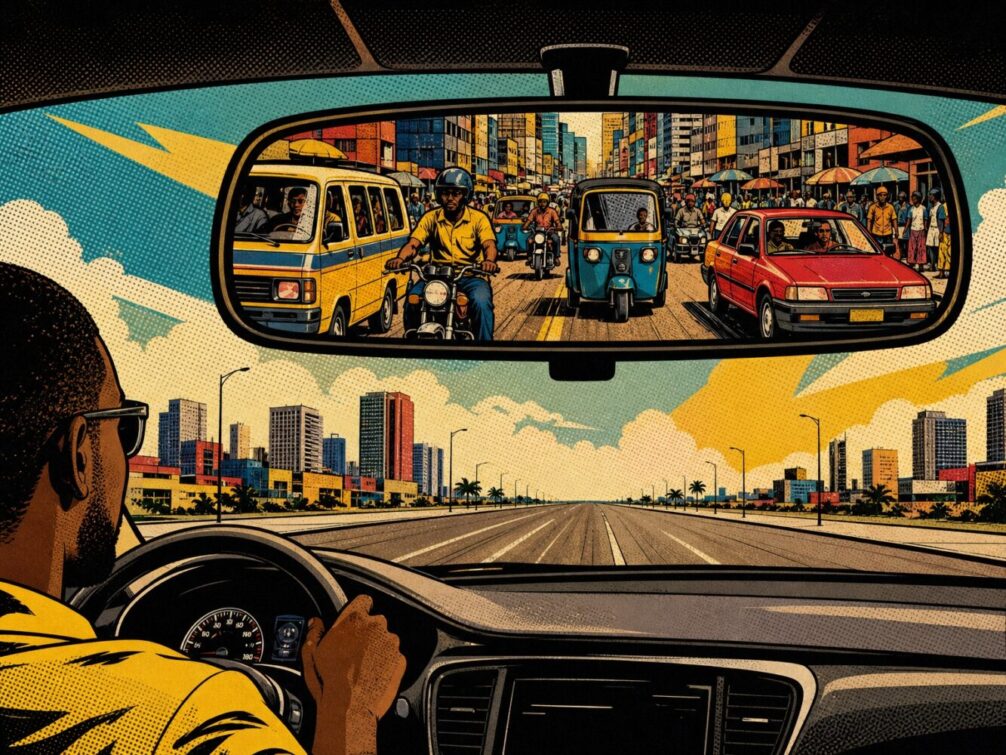
Ride-hailing platforms also compete with a wide range of local transportation options. These include danfo buses, keke na pepes (three-wheeled taxis), okadas (motorcycle taxis), and private cars. Those alternatives limit what any ride-hailing company can charge.
Nor does entry require a company to buy thousands of cars or hire a nationwide workforce. The essential asset is the platform connecting drivers and passengers. A new entrant still needs reliable software, marketing, payment systems, and enough users to make the service worthwhile. But it can compete without owning a fleet or employing its drivers, sharply reducing the capital required.
Drivers make entry easier by “multihoming,” meaning they use several platforms. The same driver may accept trips through Uber, Bolt, and inDrive, switching among them to find more passengers. A new platform therefore does not need to recruit an entirely new driver network. It can tap an existing pool of experienced drivers.
Uber’s prices also sit awkwardly with the predation story. A 2026 fare comparison found that Uber generally quoted higher prices than competing ride-hailing services. That is curious behavior for a company supposedly bent on pricing every rival out of the market.
The most basic problem with Hundeyin’s account is Uber’s exit itself. If Uber spent years subsidizing rides to secure a monopoly, leaving Nigeria means the strategy failed before the company could recover its losses. The evidence fits a more prosaic explanation: Uber struggled to make its business model work in a difficult, crowded market.
Hundeyin also claims that Uber’s real purpose was to serve as a surveillance operation for the U.S. “military-industrial complex.” That theory sits uneasily beside the predation claim. If surveillance were the objective, spending hundreds of millions of dollars on a commercial platform that would eventually abandon the market would be a remarkably roundabout strategy. Cheaper and more durable alternatives abound.
Nigeria’s transportation debate deserves economic analysis grounded in evidence, not incoherent conspiracy theories.
Big Tech Meets Local Traffic
Uber’s African experience undercuts the assumption that U.S. technology companies will inevitably dominate every market they enter. In Nigeria, the company became so synonymous with ride-hailing that “taking an Uber” came to mean ordering any app-based taxi. Yet that ubiquity never produced an unassailable competitive position.
Uber’s exits show how quickly global scale can collide with local reality. Competition, regulation, currency volatility, infrastructure, and a company’s willingness to adapt may matter more than the fame—or size—of its platform.
Policymakers should take note. Domestic companies do not necessarily need DMA-style protection simply because they compete against a globally prominent U.S. platform. Where entry remains possible and consumers have alternatives, competition can discipline even the biggest firms.
Many African markets already suffer from poorly justified price controls and other regulatory obstacles. Layering imported mandates onto that framework would compound the problem. Policymakers should instead remove needless barriers, demand economic justification for regulation, and improve the underlying conditions for local competition.
Competition policy should begin with how markets actually work, not with a borrowed presumption about who must win. Becoming a verb is not the same as becoming a monopoly.