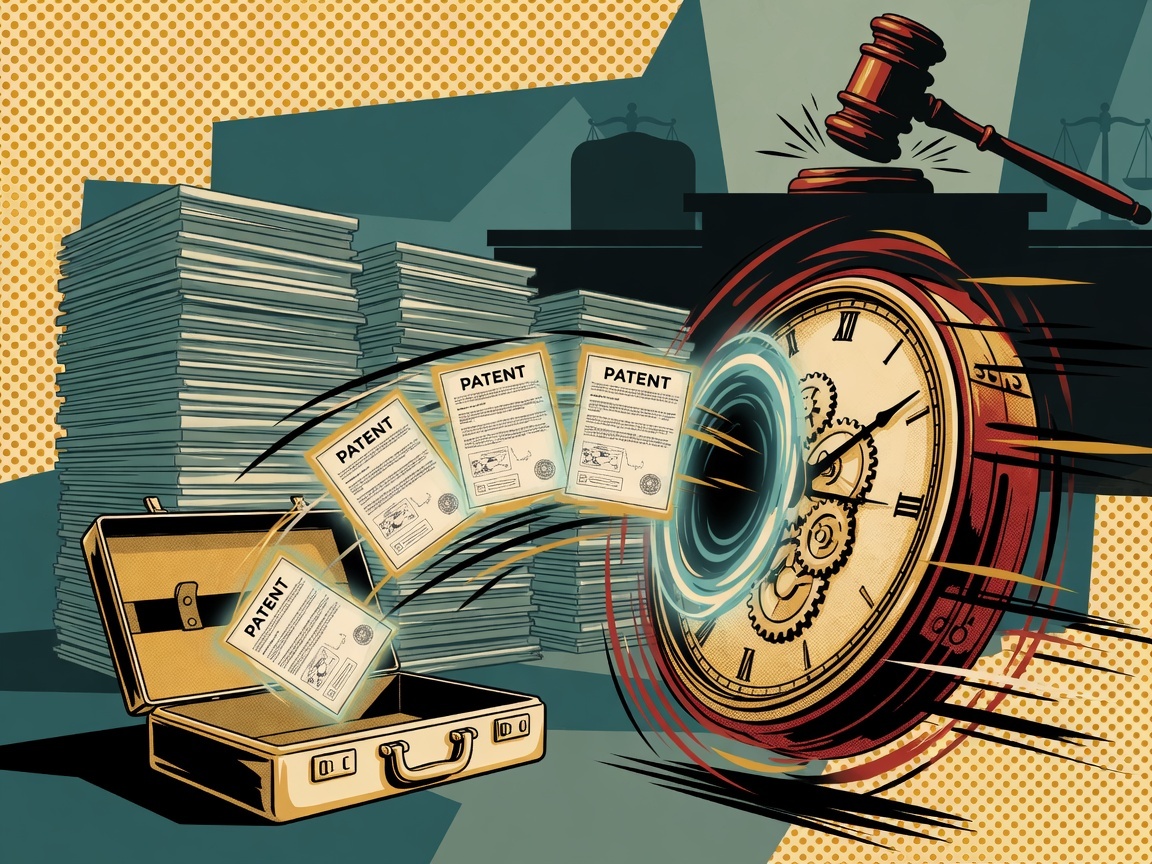
Today’s media landscape bears little resemblance to the one that existed when most existing broadcast and cable regulations were created. While consumers increasingly access video content through streaming platforms subject to minimal oversight, legacy media providers continue to operate under restrictive regulatory frameworks designed for a bygone era. This regulatory asymmetry creates economic inefficiencies and distorts competition. It’s like making a basketball team play in old-school Converse All-Stars while letting a new team wear whatever shoe they want.
This post examines how technological convergence and consumer choice have rendered traditional media-ownership regulations obsolete, and proposes a more coherent regulatory approach based on how the market actually operates, rather than how content is delivered. By establishing technology-neutral competition principles, policymakers can create a more efficient media marketplace, while still addressing legitimate concerns about market concentration.
How We Got Here: The Evolution of Media Regulation
The current regulatory framework for media ownership emerged in response to technological limitations that no longer exist. In the 20th century, when broadcast radio and television were dominant, the scarcity of spectrum justified ownership restrictions and public-interest obligations. Because airwaves were a limited and congestible resource, it was argued that the federal government was best positioned to allocate access to them.
Toward this end, Congress created the Federal Communications Commission (FCC) to regulate communications in the public interest with the Communications Act of 1934. By 1940, the FCC had established ownership restrictions for television and radio stations, aiming to ensure diverse viewpoints and market competition. The Telecommunications Act of 1996, however, removed many of these previous ownership limitations and allowed companies to own more stations nationwide.
As cable television developed in the 1970s and 1980s, it brought its own regulatory structure. Initially viewed as complementary to broadcasting, cable eventually became a competitor. But it, too, faced ownership restrictions, must-carry requirements, and various other regulations aimed at preserving competition and localism.
The early 2000s marked a significant shift in media-ownership regulations, driven by key judicial decisions that challenged the FCC’s existing rules. Through landmark court cases like Time Warner Entertainment v. FCC and Fox Television Stations v. FCC, courts consistently demanded that the FCC provide concrete evidence to justify ownership restrictions, rather than relying on theoretical arguments about media diversity.
In 2003, these judicial pressures culminated in major regulatory changes. The FCC dramatically revised ownership rules, increasing the allowed national television audience share for networks from 35% to 45%, removing cross-ownership prohibitions in cities with nine or more TV stations, and relaxing local-ownership restrictions. These changes reflected a broader trend toward deregulation, prioritizing market flexibility over previous strict limitations on media consolidation.
Despite some deregulation, a significant portion of the video marketplace remains heavily regulated under outdated regulatory concepts, as noted by former Federal Trade Commission (FTC) Commissioner Maureen Ohlhausen:
Congress and the FCC constructed a regulatory framework that distinguishes among services based on their physical platform, business model, and geographic characteristics—distinctions that are increasingly irrelevant.
Broadcasters operate under one set of ownership regulations and cable providers operate under another set. Meanwhile, the emerging market of internet-based video distribution continues to operate almost entirely free from ownership regulations. Companies like Netflix, Amazon, and YouTube entered the market without facing the ownership limitations, public-interest obligations, or local-content requirements imposed on their legacy competitors.
The Strange Regulatory Divide in Today’s Video Market
If you subscribe to both cable television and streaming services, you’re experiencing two fundamentally different regulatory regimes without realizing it. Your cable service operates under one set of rules, while your streaming subscriptions operate under virtually none. As I noted in the Wall Street Journal, “it’s absurd that flipping the channels on one’s television can mean oscillating between regulated and unregulated content.”
Consider these stark contrasts:
- Ownership Caps: Broadcast-television owners face national audience-reach caps (39%) and limits on how many stations they can own in a local market. Cable operators face their own restrictions, with the FCC historically limiting any single operator from serving more than 30% of pay-TV subscribers nationally (though this was struck down by courts). Meanwhile, streaming services face no comparable restrictions. Netflix, Amazon, Apple, and other streaming services can theoretically serve 100% of the U.S. market without triggering regulatory concerns.
- Local-Content Requirements: Broadcasters have historically been required to serve their local communities with news and public-interest programming. Cable operators must carry local broadcast stations and provide public-access channels. Streaming services have no such obligations and can develop content aimed at national or global audiences without considerations of localism.
- Vertical-Integration Limitations: Traditional media companies have faced scrutiny over vertical integration between content production and distribution. The Paramount consent decrees—which were terminated in 2020 after being in place for more than 70 years—long prevented movie studios from owning theater chains. In contrast, companies like Amazon, Netflix, and Apple function as both content creators and distributors without facing such limitations.
The Economic Case for Regulatory Parity
These regulatory disparities among distribution technologies create economic inefficiencies that are increasingly difficult to justify. From a law & economics perspective, regulation should address actual market failures, not perpetuate historical accidents. Several principles should guide our thinking.
Technological Convergence Makes Outdated Regulations Costly
The same content now flows through multiple technological channels. When consumers can access identical content through multiple pathways (broadcast, cable, satellite, streaming), regulating these pathways differently creates arbitrary distortions. As noted in an earlier post, this year’s Super Bowl game was broadcast on the Fox network and streamed on Tubi and Fubo. The Academy Awards ceremony was broadcast on ABC and streamed on Hulu, as well as services offering live streaming of ABC such as Hulu + Live TV, YouTubeTV, AT&T TV, and FuboTV.
This regulatory mismatch tilts the playing field. Broadcasters, bound by ownership limits, can’t grow or consolidate as freely as cable channels or streaming services. If a broadcast company wants to expand into more markets to compete with a cable rival, it might hit an FCC cap, forcing it to stop short. Meanwhile, cable operators and streamers can acquire more channels or bundle them strategically to lure advertisers with bigger, more diverse audiences—all without similar restrictions. This makes it harder for broadcasters to match cable’s scale and flexibility, even though they’re vying for roughly the same viewers and ad dollars.
The phenomenon gives rise to regulatory arbitrage, in which content providers exploit differences in regulations across methods of distribution. This practice has gained prominence with the rise of over-the-top platforms and streaming services, which operate under different regulatory frameworks than their cable counterparts.
As streaming services continue to disrupt the traditional broadcasting model, regulatory arbitrage allows these platforms to bypass certain restrictions that apply to cable operators, creating a more fragmented and competitive marketplace. For instance, streaming platforms often face less stringent content regulation, fees, and taxes than traditional cable providers, enabling them to offer diverse programming and pricing structures that appeal to consumers seeking flexibility and choice.
Regulatory arbitrage doesn’t necessarily improve economic welfare if it shifts investments based on regulatory considerations, rather than supply-and-demand conditions. For example, the migration of premium content from broadcast and cable to streaming services isn’t driven solely by consumer preferences; it’s partially influenced by the regulatory advantages of operating in less-regulated spaces.
The inefficiencies of regulatory arbitrage multiply when different services that serve similar functions—such as broadcast, cable, and streaming—are regulated under different frameworks. As technologies converge, disparities among the regimes erected to regulate those technologies become increasingly problematic.
For example, the Wall Street Journal reported that “President Trump has spent months howling that CBS should lose its broadcast license, because [of] its editing of an interview with Kamala Harris amid the 2024 campaign.” Soon thereafter, the FCC opened a docket and public comment on a complaint filed about “news distortion” related to the CBS piece. If however, the edited interview was streamed on Paramount+ instead of CBS, the FCC would have no jurisdiction over the content.
In the future, the FCC’s inquiry may have the effect of redirecting controversial or politically sensitive programming away from broadcast and toward cable or streaming. Such redirection would be a form of regulatory arbitrage that has no discernible benefit to consumers.
Scarcity Arguments Have Weakened
The primary economic justification for broadcast-ownership limits—spectrum scarcity—has diminished considerably. Technological innovations like digital compression have expanded capacity, while alternative distribution methods have multiplied. The original economic rationale for treating broadcast as a special case deserving heightened regulation has eroded.
In FCC v. Fox Television Stations Inc., Justice Clarence Thomas noted in his concurrence that “dramatic technological advances” had “eviscerated the factual assumptions underlying” previous decisions upholding broadcast regulation. “Broadcast spectrum,” he wrote, “is significantly less scarce than it was 40 years ago.”
In an earlier post, I reported that consumers now have more than 200 streaming platforms from which to choose, cable subscribership has dropped by more than 35% from its peak in 2010, and local broadcasters have suffered steep revenue declines as a result of reduced viewership and a shift by advertisers toward more targeted digital advertising. In addition, local stations have lost their near-monopoly on providing “late-breaking” relevant news, weather, and traffic, as consumers shift to apps, online sources, and social media for timely news updates.
What some might see as disastrous disruption is, in fact, evidence of rapid innovation and dynamic competition. Current ownership rules—developed in a world of spectrum scarcity and near-monopoly—cannot keep pace with the rapid increase in competition from a wide range of technologies and distribution methods.
Market Power Concerns Should Be Technology-Neutral
Policymakers and regulators evaluating competition in video markets face a seeming paradox: so many monopolies, or near-monopolies, but so much competition. Local governments confer cable monopolies through their franchise agreements. Local broadcasters operate in an oligopoly driven by broadcast licensing. And so-called “Big Tech”—Netflix, Amazon, YouTube, and Apple—occupies a substantial portion of the streaming business.
Nevertheless, consumers have a cornucopia of choice in content, as well as numerous options to watch the same content delivered by competing services. As noted above, even something as exclusive as the Super Bowl could be viewed via antenna, cable, direct broadcast satellite (DBS), or a variety of streaming services.
That’s why economic theory suggests that any evaluation of market power must focus on consumer choice, rather than the specific technology delivering the content. Even a cable company granted a franchise to be a city’s monopoly provider of cable-television services has little power in the market to deliver content within that city. The popularity of “cord-cutting” clearly demonstrates that any market power once held by cable companies has eroded over time.
Market power exists when a firm can profitably raise prices above competitive levels. The ability to exercise such power isn’t inherently tied to whether content arrives via broadcast signals, cable wires, or internet streams. Consequently, market power and antitrust analysis should be technology-neutral, and not tied to whether content arrives via broadcast signals, cable wires, or internet streams.
It’s important to note that increased concentration does not automatically lead to decreased competition. Research published in the American Economic Review found that broadcast-television ownership deregulation was associated with industry consolidation, which led to significant increases in profitability. But the paper notes that increased profitability was achieved primarily through substantial cost savings and, importantly, did not come at viewers’ expense. Instead, the research finds that consolidation had a slightly positive impact on viewership, suggesting that larger broadcast groups were able to invest in better programming.
While author Jessica Stahl found some evidence that “duopolies” allowed stations to exert local market power, the primary driver of revenue gains was broader national coverage, enabling stronger bargaining power with advertisers. Thus, Stahl’s findings support the argument that deregulation can lead to greater efficiency and profitability in the media industry, without necessarily harming consumers.
A Framework for Comprehensive Reform
A more coherent approach to media ownership would start by acknowledging that video distribution is now a unified market with a constellation of technologies to deliver content. Reforming media-ownership regulations requires several key elements.
Assess Market Power Holistically
Rather than treating broadcast, cable, and streaming as separate markets, regulators should consider them segments of an integrated video-distribution market. Market power should be assessed based on a company’s share of this broader market, not just its dominance within a particular technological segment. More importantly, it should focus on consumer choice and how consumers respond to changes in pricing, programming, quality, and other important aspects of competition.
For example, a broadcast network might control a significant percentage of local TV stations but represent a much smaller share of overall video consumption. Similarly, a streaming service might dominate internet-based video but face competition from traditional sources. In both cases, an evaluation of market power must consider both how consumers can obtain the content and—more importantly—how they do obtain the content.
Replace Technology-Specific Rules with Competition Principles
Instead of different rulebooks for different technologies, we need a unified framework based on competition principles. This would mean:
- A sunset on legacy regulations tied to specific technologies;
- If policymakers do adopt ownership limitations, they should be based on actual market share across all platforms; and
- The focus should be on antitrust enforcement, rather than preemptive structural regulations.
The FTC and U.S. Justice Department (DOJ) already use market definition and concentration analysis to evaluate mergers in other industries. Similar principles could apply to media ownership, focusing on whether a transaction would substantially lessen competition in relevant geographic and product markets.
Recognize Consumers’ Substitution Patterns
Regulations should reflect how consumers actually view different video services. If consumers readily switch among cable, broadcast, and streaming based on content, rather than delivery method, regulations should treat these services as competitive alternatives.
Evidence suggests that this substitution is increasingly common. When Netflix raises prices, some consumers shift to other streaming services—but others return to cable or broadcast options. This behavior indicates a more unified market than our regulatory structure acknowledges.
Effective regulation and enforcement must be based on actual and convincing evidence of consumer harms, not mere speculation or theories of potential harms.
Moving Toward a More Coherent Framework
The current regulatory disparity between traditional media and digital platforms is increasingly untenable. As distribution technologies converge and consumer behavior evolves, our regulatory framework should adapt accordingly. A technology-neutral approach to ownership would recognize that cable, broadcast, and streaming are all part of the same competitive ecosystem.
By moving toward comprehensive deregulation that treats similar services similarly, regardless of technology, we could create a more efficient media marketplace that better serves consumers, while still addressing legitimate competition concerns. The key is to focus on how ownership affects actual market power and consumer welfare, rather than perpetuating artificial distinctions among delivery methods.
This doesn’t mean abandoning all regulation; market power concerns remain real. But it does mean developing a more coherent framework that applies consistently across technologies and focuses on outcomes, rather than inputs. This approach would emphasize clearly defining property rights, minimizing transaction costs, and using targeted regulations only when market failures are substantial.
The task isn’t simple, but the potential benefits are significant: a media landscape in which competition would be waged on a level playing field and where consumers, not regulatory distinctions, determine which services succeed. If you want a fair basketball game, every team should have access to the same gear. It’s time for our media-ownership regulatory framework to catch up with technological reality.