Showing archive for: “Vertical Integration”
Pump and Circumstance: The Politics of Italy’s Fuel-Price Caps
The Italian government is claiming a victory at the pump. Eni, the country’s largest oil company, has announced a 30-day cap on retail fuel prices. Italy’s second-largest fuel retailer, IP, controlled by the State Oil Company of Azerbaijan Republic (Socar), followed suit, as did the third-largest, Q8. Smaller rivals warn that the caps could squeeze ... Pump and Circumstance: The Politics of Italy’s Fuel-Price Caps

The Rivals Antitrust Can’t See
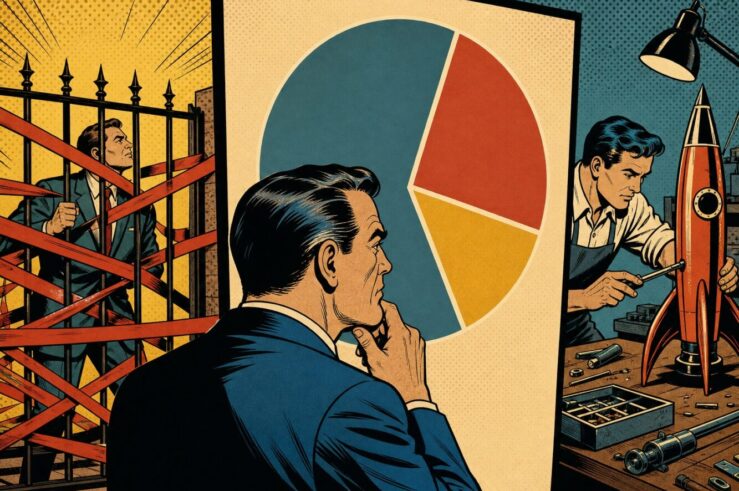
The next serious competitor may be waiting for a license, or working on a product nobody has seen yet. Neither shows up in today’s market-share figures. And much of the current antitrust debate ignores both of those figures completely, even as it ponders how aggressively the government should reshape markets. By contrast, a dynamic approach ... The Rivals Antitrust Can’t See
‘The Economics of the Marriage Contract: Theories and Evidence,’ by Niko Matouschek and Imran Rasul
Marriage is a natural subject for law & economics scholars. From Gary Becker’s “A Treatise on the Family” (1981) to Margaret Brinig’s “From Contract to Covenant” (2000), scholars have expanded our understanding of romantic love by examining it through an economic lens. Some object that bringing law & economics into marriage risks coarsening and cheapening ... ‘The Economics of the Marriage Contract: Theories and Evidence,’ by Niko Matouschek and Imran Rasul

Prime Targets: Amazon, No-Poach Rules, and the Limits of Antitrust
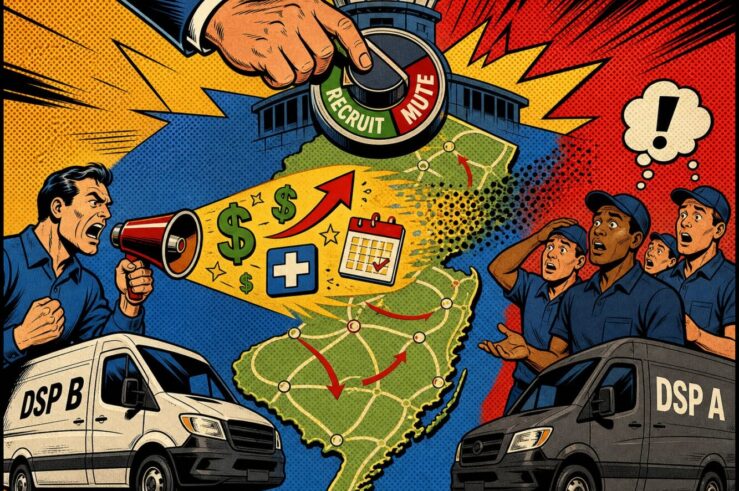
The State of New Jersey’s antitrust case against Amazon begins with a serious allegation: that Amazon restricted drivers from moving among competing delivery contractors. But the state’s complaint goes much farther. It argues that Amazon’s entire Delivery Service Partner (DSP) system unlawfully gives the company monopsony power over both the small businesses that deliver its ... Prime Targets: Amazon, No-Poach Rules, and the Limits of Antitrust
The DMA Meets the Rule of Law
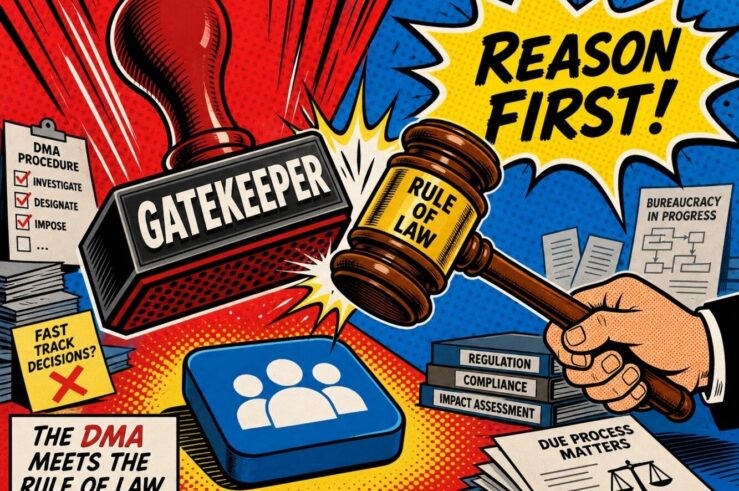
The European Union’s Digital Markets Act was built to move fast: designate gatekeepers, impose obligations, and reshape digital markets before the lawyers can finish sharpening their pencils. But in Meta Platforms Ireland v. Commission, the General Court offered a useful reminder: even Europe’s new digital rulebook still has to pass through an old-fashioned door marked ... The DMA Meets the Rule of Law
The FTC, Express Scripts, and the High Cost of Lower Copays
Nearly 17 months after the Federal Trade Commission filed suit against the nation’s three largest pharmacy benefit managers (PBMs), the agency has reached a settlement with one of them: Express Scripts. The complaint alleged that PBMs harmed competition and patients by inflating insulin prices. PBMs negotiate drug prices with pharmaceutical manufacturers and pharmacies on behalf ... The FTC, Express Scripts, and the High Cost of Lower Copays

Brightline Rules and Case-by-Case Courts: The DMA and Epic v Apple
Brightline rules promise clarity. The early enforcement record suggests something closer to friction. Part I of this two-part series examined how mobile app-store anti-steering policies—rules that restrict developers from directing users to alternative offers or payment portals outside the app store—affect competition, consumers, and innovation. It also compared those policies with the restrictions upheld in ... Brightline Rules and Case-by-Case Courts: The DMA and Epic v Apple

The Blind Spots of Brightline Rules: The DMA and Anti-Steering
Two years ago, the European Union’s flagship Digital Markets Act (DMA) took effect. The DMA promised to make platform markets “fairer and more contestable” for the businesses that rely on them to reach consumers by imposing a set of brightline mandates on designated gatekeepers. In the United States, advocates of DMA-style competition rulemaking include former ... The Blind Spots of Brightline Rules: The DMA and Anti-Steering

DOJ’s Not-so-Modest Proposal
The U.S. Justice Department (DOJ) late last month filed its much-anticipated initial proposed final judgment in the Google Search antitrust case. The proposal—to use a bit of baseball parlance—swung for the fences. Maybe they’ll get a hit, or maybe even a home run. Or not. Dodgers superstar Shohei Ohtani hit a whopping 54 home runs ... DOJ’s Not-so-Modest Proposal

Why It May Be Time to Consider a Merger Policy Reset in 2025
The Biden administration’s federal antitrust regulators—the U.S. Justice Department (DOJ) and the Federal Trade Commission (FTC)—have been widely perceived as actively discouraging mergers and acquisitions. This reflects the rejection of a longstanding bipartisan understanding that government would only oppose proposed M&A transactions that are likely to harm competition. The Biden approach arguably threatens to harm the ... Why It May Be Time to Consider a Merger Policy Reset in 2025

Note to the FTC: Punishing Efficiency Means Destroying Competition
Yesterday, Lina Khan’s FTC released their long-awaited draft merger guidelines for public comment. Regrettably yet not unsurprisingly, the new guidelines are a radical departure from established case law and antitrust thinking. They’re marked by a failure to account for the role of efficiencies in the competitive process, and a failure to distinguish between the implications of generally ... Note to the FTC: Punishing Efficiency Means Destroying Competition

7 Top Takeaways from the 2nd Annual Mercatus Antitrust Forum
At the Jan. 26 Policy in Transition forum—the Mercatus Center at George Mason University’s second annual antitrust forum—various former and current antitrust practitioners, scholars, judges, and agency officials held forth on the near-term prospects for the neo-Brandeisian experiment undertaken in recent years by both the Federal Trade Commission (FTC) and the U.S. Justice Department (DOJ). ... 7 Top Takeaways from the 2nd Annual Mercatus Antitrust Forum