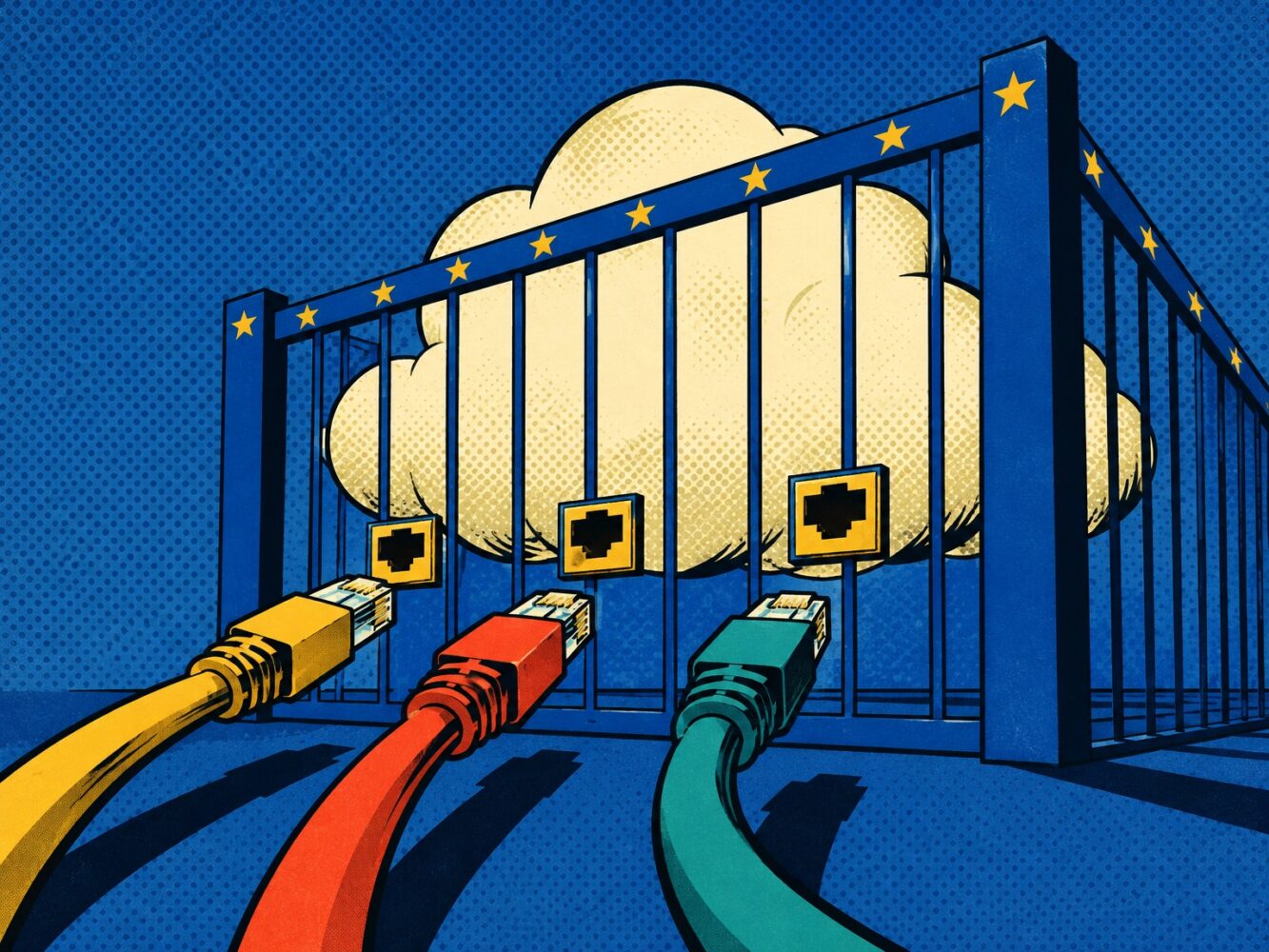
As patient observers continue to await the U.S. Supreme Court’s decision in Free Speech Coalition v. Paxton, which many hope will clarify the constitutionality of online age-verification regulations, the debate over how to best protect children online, given the strictures of the First Amendment, continues to evolve.
While several states have attempted to impose age-verification requirements on social-media and online pornography sites and apps, courts have (with only rare exceptions) largely rebuffed these attempts under applicable Supreme Court precedent. Some states and federal legislators have also proposed app-store verification, which—while somewhat different—presents the same fundamental issues.
The more recent move has been toward device-level age verification and parental consent, with filtering technology automatically enabled by default. These so-called device-filtering bills are popping up in states around the nation and have received some support at the national level. Indeed, one such bill, Idaho’s SB 1158, is up for consideration this morning before that state’s Senate State Affairs Committee.
In this post, I will consider whether a device-level approach is less restrictive than imposing age verification and parental consent at the content or app-store level. To skip to the conclusion: while laws aimed at limiting access to online pornography stand a better chance than those that would limit access to all online speech, device-filtering mandates do not appear to be the lowest-cost (or least-restrictive) way to deal with the problems of child protection online, given the tools readily available in the marketplace.
The First Amendment Law & Economics of Device-Filtering Mandates
It is clear that access to the internet offers both tremendous benefits as well as potential harms, including and perhaps especially for minors. An important public-policy question is how to negotiate the tradeoffs between protecting minors from those harms without unnecessarily restricting both minors’ and adults’ access to lawful speech.
In the language of law & economics, the question is which party is the lowest-cost avoider of harms, bearing in mind relevant transaction and social costs. Among the relevant social costs in this context is the risk of collateral censorship. The law should impose the cost of avoiding the harms of internet usage on the person(s) who can do so at the lowest cost. In the language of First Amendment jurisprudence, the question is whether a particular restriction on speech is the least restrictive among available effective alternatives.
For example, Idaho’s proposed SB 1158 would require:
All devices activated in the state [to] (1) Contain a filter; (2) Determine the age of the user during activation and account setup; (3) Enable the filter for minor users; (4) Allow a password to be established for the filter; (5) Notify the user of the device when the filter blocks the device from accessing a website; and (6) Provide the password-holding user with the opportunity to deactivate and reactivate the filter.
Under terms of the bill, civil liability would attach to the device manufacturer if the device does not have a filter and minors are able to access obscene material while using the device. The bill would provide a safe harbor of sorts for device manufacturers that make a “good faith effort” by automatically enabling “a generally accepted and commercially reasonable filter that blocks obscene material on all internet browsers and search engines accessed on the device.”
Now, it is true that many device makers have already created tools to help parents protect their children online, including protections similar to those proposed by the device-filtering bills. Indeed, Apple recently published a white paper detailing its efforts and new features aimed at giving parents more ability to monitor and control what their kids access. But it remains far from clear that mandating device filters is costless.
The most important considerations for determining the extent of potential collateral censorship that might arise from device-filtering bills will include whether the law will require age verification and parental consent to access all content or just illegal content, as well as how much information would have to be collected to verify age or gain parental consent. To the extent they raise the transaction costs to access lawful content, age-verification and parental-consent laws may violate the First Amendment.
After oral arguments concluded in the Free Speech Coalition case, I predicted the Court would likely reconsider its jurisprudence on online age verification, but hoped that they would do so in a way that blessed only those age-verification requirements that apply to content that is illegal for minors to access. Assuming that will be the case, device-filtering laws that are aimed at restricting minors’ access to content that is obscene to them (i.e., primarily online pornography) will have a better chance at surviving First Amendment scrutiny than laws that would restrict access to content that is lawful for minors to access.
The Idaho proposal is a mixed bag on this front. As the Supreme Court put it in Brown v. Entertainment Merchants Association, this proposed bill “straddles the fence between (1) addressing a serious social problem and (2) helping concerned parents control their children. Both ends are legitimate, but when they affect First Amendment rights they must be pursued by means that are neither seriously underinclusive nor seriously overinclusive.” In that case, the late Justice Antonin Scalia wrote that California’s law forbidding minors from buying violent video games was “seriously underinclusive… because it permits a parental or avuncular veto” and “as a means of assisting concerned parents it is seriously overinclusive.”
Under the proposed Idaho law, parents would retain the ability to turn off the filter. This might be because the law implicitly recognizes that filters may end up restricting access to lawful content (overinclusive) and thus it preserves parents’ ability to grant their children access to that content. Or it may effectively undercut the argument that the bill is narrowly tailored to the state interest of protecting children from obscene content (underinclusive) by extending parental consent to allow their children to access illegal content. In other words, this type of device-filtering law is either restricting speech too much in the name of paternalism or failing to live up to its purpose of protecting minors from online pornography.
The requirement for how device manufacturers are to “determine the age of the user” is also far from clear. Is it enough to allow minors or parents to set up accounts as the device is being activated by simply inputting the birthdates of minor users? Requiring parents or minors to upload some kind of authorized document proving age would pose privacy risks, as well as presenting a transaction cost that many may be unwilling to bear. Low-cost age-verification measures like biometrics or zero-knowledge proofs might be possible, but it’s unclear how these would apply under the proposed Idaho law.
Requiring too little data would likely lead to easy evasion of the law’s protections—whether it’s a minor user setting up the device and lying, or a parent helping their child to do so. Requiring too much data would raise transaction costs to the point that access to lawful speech for both adults and minors could be affected. Proposed device-filtering laws would thus have to find a way to require exactly the right amount of data to prove age, while not unduly restricting the ability of both minors and adults to access First Amendment-protected content.
Moreover, while online age-verification technology has clearly improved since the Supreme Court last considered the question, so have the tools to help parents and minors avoid harmful internet content. As mentioned above, Apple has introduced even more features to help parents protect their children while using Apple devices, but there are also tools available beyond the device level. The government could do far more to promote technological literacy for both parents and minors, while also promoting adoption (and creation of even more) of these tools. This would clearly be a less-restrictive means to promote children’s online safety than device-filtering mandates—which, it still seems likely, may also restrict access to lawful speech.
Conclusion
The best way to protect children online is to empower parents. But laws that require content filters on devices used by minors could lead to collateral censorship that would violate the First Amendment. The government should refocus on helping parents and minors to navigate the internet by using the technological and practical means available to them, rather than imposing new barriers to access lawful speech.