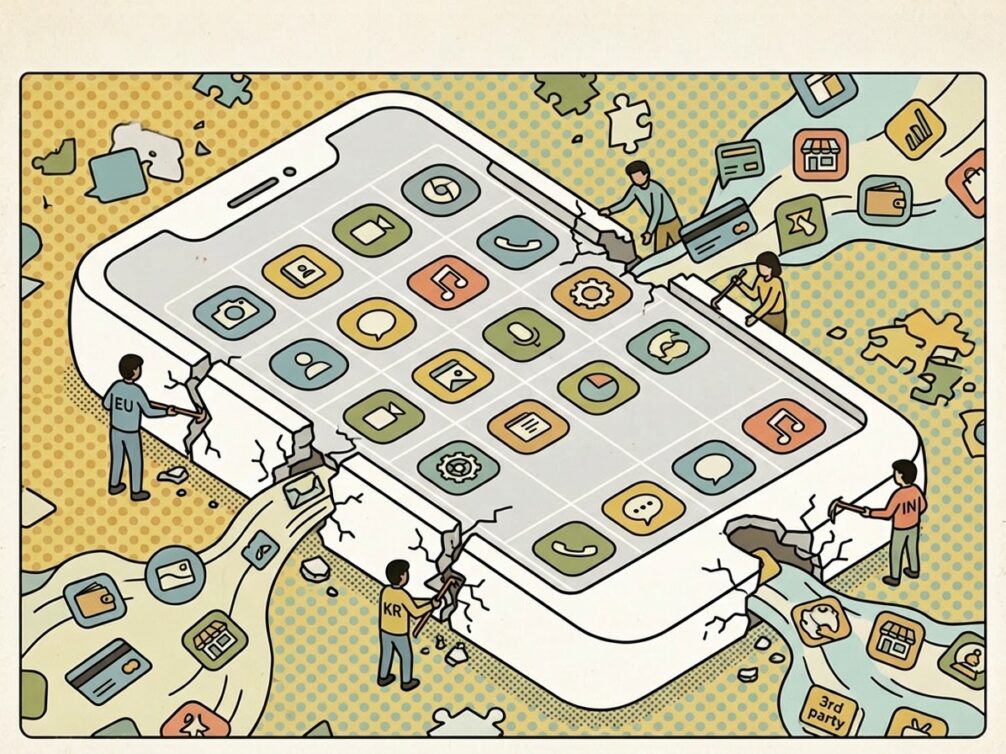
Apple Inc. is being forced to open its ecosystem—just not everywhere, and not all at once. From Tokyo to Seoul to Brussels, regulators are rewriting the rules of platform governance, often with different assumptions, tools, and end goals. The result is not a single global standard, but a growing patchwork of experiments in how much control platforms should retain—and at what cost.
This post examines what those experiments reveal. It explores the shift toward ex ante regulation, the tension between openness and design, the rise of regulatory benchmarking across jurisdictions, and the evolving economics of the so-called “Apple Tax.” Along the way, it asks a broader question: whether regulators can—and should—be calibrating complex digital ecosystems, or whether that task is better left to competition, experimentation, and consumer choice.
Integration on Trial
Japan’s Mobile Software Competition Act (MSCA) represents one of the clearest efforts outside Europe to import the European Union’s regulatory model for digital platforms. Enacted against the backdrop of growing global concern over the market power of large technology firms, the MSCA targets so-called “gatekeeper” platforms—particularly in mobile ecosystems—by imposing upfront obligations on how they design and operate their services.
In doing so, the Act adopts a distinctly European-style approach. It treats vertical integration in mobile ecosystems as presumptively problematic and responds with ex ante unbundling, rather than case-by-case enforcement. That marks a clear departure from both economic theory and traditional antitrust practice, which have generally evaluated integration based on its actual competitive effects rather than assuming harm at the outset.
Antitrust law has never treated vertical integration as inherently anticompetitive. To the contrary, a substantial body of evidence shows that integration often reduces friction, lowers transaction costs, and delivers simpler, more reliable user experiences (here). Courts and enforcers have therefore assessed vertical integration contextually, intervening only when it excludes rivals or harms consumers in specific circumstances.
The MSCA—like the EU’s Digital Markets Act (DMA)—takes a different approach. It restricts forms of integration precisely where platforms often integrate for efficiency. The law limits self-prioritization, constrains control over distribution and payments, and mandates greater openness to third parties. These interventions assume, rather than demonstrate, that platform control is more likely to suppress than enhance competition.
That assumption sits uneasily with the empirical literature on digital platforms. Research shows that platform entry into complementary markets can expand demand, improve quality, and even spur innovation by third-party developers, rather than crowding them out.
To be sure, unbundling can increase competition within a platform by lowering entry barriers for alternative app stores or payment providers. But those gains come with costs. Apple’s integration of distribution, discovery, and payments reflects more than technical necessity—it is a core product-design choice. iOS centers on curation, security, and clear lines of responsibility.
Many consumers choose Apple precisely because they value a single, reliable intermediary and know where accountability lies when something goes wrong. Splitting these functions across multiple actors fragments responsibility, complicates enforcement, and shifts costs to users through added complexity, risk, and friction.
The MSCA also raises a broader competitive tradeoff. Forcing Apple to loosen its curation may increase intra-platform competition, but it risks reducing inter-platform competition by making iOS more like Google LLC’s Android operating system. Regulators may gain competition within iOS at the expense of competition between differentiated ecosystem models.
That outcome is not obviously welfare-enhancing. It also raises a classic error-cost concern: the risk of condemning a differentiated, consumer-valued design choice rather than genuinely exclusionary conduct.
One Opening, Global Fallout
Japan’s intervention also has implications beyond its own borders. Because Apple operates a global platform, changes imposed in one jurisdiction inevitably shape how the company defends its design choices elsewhere. If Japan forces Apple to open its ecosystem in Tokyo, how can the company defend its “technical necessity” argument in Mumbai or Beijing?
This tension highlights a broader problem of regulatory spillovers. Concessions made in one market can weaken a firm’s credibility in another, even when legal obligations differ. Japan’s approach therefore complicates Apple’s position abroad, but it does not resolve it. Instead, it raises a deeper question about whether platform design can remain globally coherent in a world of increasingly fragmented regulatory demands.
Apple’s core claim has not been that opening iOS is impossible. Instead, the company argues that doing so degrades the user experience—making devices less safe, less private, and more confusing as responsibility fragments across multiple app stores and payment systems. Apple has also framed some concerns in technical terms, noting that it has not identified ways to open certain functions without increasing risks to user data.
The issue is less “possible versus impossible” and more about design tradeoffs: how much openness, under what safeguards, and in which enforcement environment. As I argued in my op-ed in Japan Today, the MSCA—and similar ex ante regimes such as the DMA and the United Kingdom’s Digital Markets, Competition and Consumers Act (DMCC)—is best understood as an experiment.
We do not yet know how these tradeoffs will play out in practice. We only know they will exist. That uncertainty matters because the MSCA rests on assumptions that depart from traditional antitrust analysis, including treating self-preferencing and certain forms of vertical integration as presumptively harmful.
Ultimately, the act will be judged not by how many new intermediaries it enables, but by whether users are better off once security, reliability, and accountability are taken into account. It also gives regulators significant authority to determine how open a platform must be and how much control its owner may exercise.
Different regulators will answer those questions differently. Outcomes in Tokyo may not map neatly onto Mumbai or Beijing.
Pricing Under Pressure
Apple’s reported 15% commission for WeChat “mini-apps” in China creates the impression of a strategic retreat, particularly given the company’s long-standing defense of its standard commission structure. The move follows mounting pressure from Chinese authorities and the unique importance of Tencent Holdings Ltd.’s WeChat ecosystem, where “mini-apps” function as an embedded platform within a platform—blurring the lines between app distribution, payments, and services.
But this is not just a story about a single concession in a single market. It illustrates something broader than a straightforward economic compromise. It highlights how platform pricing and governance are increasingly shaped by regulatory context, bargaining dynamics, and local ecosystem power—rather than by a uniform global business model.
China has developed a regulatory style that relies heavily on discretion and ambiguity, where the threat of intervention can be as influential as the law itself. That dynamic is not unique to China. The DMA and the MSCA similarly empower regulators to intervene when fees are deemed “too high” or terms “unfair,” while offering limited guidance on what those standards mean in practice.
The result is a governance model in which regulated firms are expected to justify and continuously adjust their business models, often while second-guessing whether they have gone far enough.
From a law & economics perspective, the more salient issue is institutional, not geopolitical. There is no objectively “right” platform commission that regulators can discover. Outcomes will tend to reflect bargaining power, political salience, and local institutional context, rather than clear economic benchmarks.
Even when headline fees fall, platforms can rebalance costs elsewhere in the ecosystem. Apple’s Core Technology Fee in the EU is a good illustration of how cost incidence can shift in ways that benefit some firms while disadvantaging others, particularly smaller developers or those with different business models.
More fundamentally, this reflects a broader shift from market-enabling regulation toward active market-shaping. Regulators increasingly influence pricing, access, and platform design in complex, fast-moving ecosystems.
Borrowed Benchmarks
The spread of these regulatory interventions does not occur in isolation. As more jurisdictions experiment with platform rules, regulators increasingly look to one another for reference points. The Competition Commission of India (CCI), for example, reportedly treats Apple’s concessions in Japan as a benchmark for what is “economically viable.”
That approach reflects a growing tendency toward regulatory benchmarking across borders. But it also raises a basic question: Does it make sound economic sense to use a fee structure extracted in one jurisdiction as “Exhibit A” in another, or does that risk ignoring the distinct economic conditions and tradeoffs that shape each market?
From a law & economics perspective, the answer is clearly the latter. A fee structure that emerges under regulatory pressure in one jurisdiction is not evidence that it is efficient or welfare-enhancing—even there, much less elsewhere. It reflects a specific mix of enforcement capacity, payment infrastructure, fraud risks, market structure, and bargaining dynamics.
Treating it as a benchmark risks a cascade effect. Once one regulator extracts a concession, others may treat it as a floor rather than a ceiling, even when underlying conditions differ. Lower commissions in one country may be absorbed relatively smoothly; in another, they may increase fraud, disputes, and consumer friction.
Platforms may also respond by shifting costs elsewhere—through per-install fees, compliance charges, or security-related requirements—often with uneven effects across developers.
The result is growing fragmentation. Although regimes such as the DMA are often presented as imposing common standards, their international diffusion may instead produce locally tailored outcomes.
That shift contrasts with the consumer welfare standard, which has long provided a relatively consistent benchmark across jurisdictions. Moving toward open-ended notions of “fairness” or “appropriate” pricing risks replacing that common framework with a patchwork of negotiated outcomes.
Same Fee, New Wrapper
South Korea provides a concrete example of how these regulatory interventions play out once implemented. In 2021, the country amended its Telecommunications Business Act to require Apple and Google to allow third-party in-app payment systems—an early test case for opening mobile ecosystems through legislation.
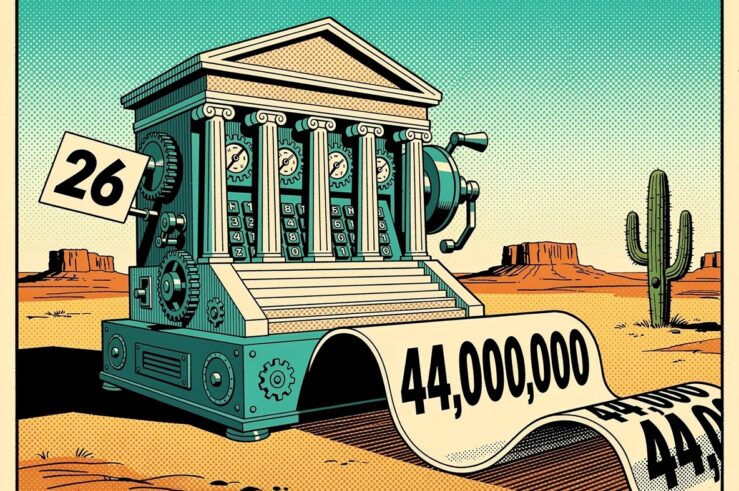
In practice, however, the results have been more nuanced. Apple now permits alternative payment methods, but still imposes a 26% commission on those transactions, in addition to the fees charged by payment processors. A similar pattern emerged in the Netherlands, where regulators required changes for dating apps, yet Apple maintained a substantial commission alongside new conditions.
This does not necessarily reflect bad faith. It is, instead, a predictable economic response. Apple will continue to charge for access to iOS—its intellectual property, tools, distribution, security, and infrastructure. When regulators constrain one revenue stream, the firm has strong incentives to reprice elsewhere.
The EU’s Core Technology Fee made that dynamic especially visible. Debate often focuses on headline commissions rather than on how costs shift across developers and users.
In that sense, these laws change the form of the fee more than its existence. They encourage “compliance by reclassification,” with more complex pricing structures.
That complexity creates its own costs. Country-specific regimes increase legal risk, engineering overhead, and compliance burdens, and raise the likelihood of inadvertent noncompliance. Over time, fragmentation may make international operations more expensive than operating under a more uniform U.S. framework.
Openness vs. Coherence
Apple CEO Tim Cook has repeatedly argued that greater “openness” can invite malware and undermine user security—a position that has featured prominently in Apple’s response to regulatory efforts in the United States, Europe, and Asia. But this argument is best understood not as a claim that Apple’s system is perfect, or that open systems cannot be safe. Rather, it is a claim about platform governance and the tradeoffs embedded in different design choices.
From its inception, Apple has prioritized a curated, tightly integrated ecosystem over maximum openness. That model emphasizes control over app distribution, review, and payments as a way to deliver a simpler, more secure, and more predictable user experience. Some users clearly value that approach. Others prefer more open systems, such as Google’s Android operating system, which offer greater flexibility and choice. Both models coexist in the market, reflecting different consumer preferences, rather than a single “correct” design.
Curation relies on centralized control over distribution, review, and payments. When laws mandate sideloading, third-party app stores, or alternative payments, that model becomes more fragmented. Even with safeguards, Apple’s ability to control what reaches users—and to ensure a consistent experience—declines.
That does not guarantee harm, but it increases the likelihood of lower-quality or riskier apps at the margins. The extent of that effect remains uncertain.
The larger issue is coherence. Apple continues to emphasize curation in the United States while implementing legally required openness elsewhere. That creates a fragmented product identity.
More broadly, these regimes assume regulators can identify the “optimal” level of openness, pricing, and control. That premise is questionable. In practice, those balances are typically discovered through competition, experimentation, and consumer choice.
By shifting toward ex ante calibration, laws such as the MSCA and the DMA move those decisions toward regulators. Whether that tradeoff is justified is not self-evident—and raises familiar concerns about error costs and unintended consequences.
Barrier or Backbone?
The so-called “Apple Tax” sits at the center of many of these debates, but it is often invoked more as a slogan than as a clearly defined concept. Critics frame it as a toll that raises costs and limits entry, while defenders characterize it as the price of accessing a global distribution and payments infrastructure. In reality, it can function as both a barrier and an enabler, depending on the developer, the business model, and the market context.
That ambiguity is compounded by a lack of precision in how the term is used. “Apple Tax” is often treated as a catch-all for any fee associated with the App Store, even though Apple’s pricing structure is more nuanced. Clarifying what the fee actually covers—and how it operates—is essential to evaluating its effects on competition, entry, and innovation.
Apple does not charge a per-app listing fee, although developers typically pay about $99 per year for the Apple Developer Program. Free apps that do not sell digital goods pay no commission. The relevant fee is the commission on paid apps and in-app purchases, with a reduced 15% rate for eligible small developers.
For some developers, that commission can be a marginal barrier. For others—particularly those outside major tech hubs—it functions as an enabling infrastructure fee.
It supports distribution, discovery, payments, fraud management, and access to a trusted marketplace. It allows a developer in Vietnam to reach a customer in New York without having to build the entire commercial stack herself.
The more important question is the net effect on entry and innovation. Lowering headline commissions does not eliminate costs; it merely shifts them.
The relevant benchmark is not whether the fee is “high,” but whether the overall system promotes access and innovation without undermining the trust and infrastructure that make the ecosystem valuable.
Regulation as Experiment
Across jurisdictions, one pattern emerges: regulators are not converging on a single model of platform governance—they are running parallel experiments. Each reflects different assumptions about competition, control, and the role of the state in shaping digital markets.
Those experiments carry real tradeoffs. Expanding openness may increase entry and reduce certain frictions, but it can also fragment governance, shift costs, and erode product coherence. Lowering headline fees may benefit some developers, while redistributing costs to others. And greater regulatory discretion may correct perceived imbalances, but it also introduces uncertainty, negotiation, and the risk of error.
What makes this moment unusual is not just the scale of intervention, but its ambition. These regimes do not simply police conduct; they attempt to redesign markets and products ex ante. That requires confidence not only in legal authority, but in the ability to calibrate complex, evolving ecosystems.
Whether that confidence is warranted remains an open question.
For now, the “Apple Tax,” the “walled garden,” and the push for openness are not being resolved—they are being renegotiated, jurisdiction by jurisdiction. And in that process, the real risk is not that regulators or platforms get everything wrong, but that in trying to optimize everything, they end up flattening the very differences that competition is supposed to reveal.